The Only Complete Archive: All Five Currents of Black Political Strategy, 1970s–1990s Depth
Black Politics documents all five currents of Black political strategy from Reconstruction to the present—the only platform offering this diverse, comprehensive coverage. In addition, we specialize in deep archival documentation of the 1970s–1990s, the crucial decades between the well-documented 1960s civil rights era and the digital age, when Black political infrastructure was built at the grassroots level.
📖 BlackPolitics.org uses a Five Currents framework to analyze Black political strategies—from electoral campaigns to revolutionary movements. Explore the framework →
Subscribe to Black Politics
Get our latest analysis on political systems and voting rights delivered straight to your inbox.
Voter registration totals from official state election offices
Voting-age population estimates from the U.S. Census Bureau’s CVAP tabulation
Methodology: Registration rates were calculated by dividing total registered voters by the estimated voting-age population for each county. Where racial breakdowns were available, Black registration rates were compared directly to Black voting-age population. Averages were derived across selected counties to illustrate structural exclusion and civic potential.
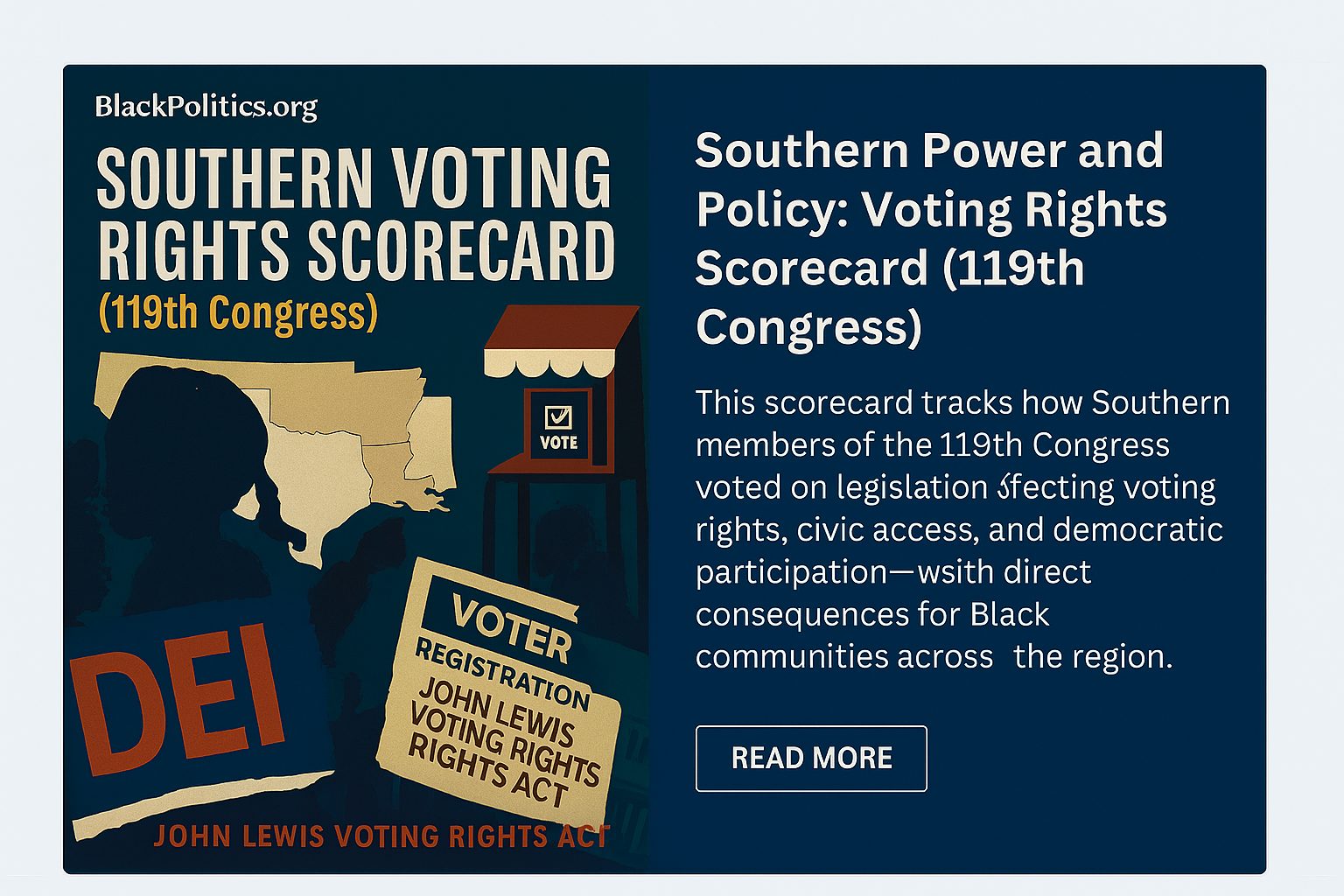
This Southern Voting Rights scorecard tracks how Southern lawmakers voted on HR1 and HR4 — the most consequential voting rights bills of the 119th Congress. The stakes are high, and the suppression risk is real.
Southern Voting Rights Scorecard
The Southern Voting Rights Scorecard evaluates members of Congress from Alabama, Georgia, Mississippi, Florida, Texas, South Carolina, and beyond — based on:
Selwyn Carter, the Editor-in-Chief of Black Politics leads the strategic vision, editorial integrity, and archival design of BlackPolitics.org. With deep experience in national, state, and local campaigns—including efforts to build and strengthen independent Black political parties—the Editor-in-Chief bridges historical insight with technical innovation.
Grounded in African American history, voting rights advocacy, and coalition strategy, Selwyn brings an unparalleled background of first-hand institutional authority to the platform, having served for 26 years on the national staff of the AFL-CIO. His entry into the highest echelons of organized labor was forged through a foundational relationship with the iconic strategist who would go on to serve as New York City’s Deputy Mayor, an alliance that directly connected him to the architect of modern Black labor infrastructure. Prior to his national tenure, Selwyn spent decades developing extensive working relationships with the powerhouse executive leadership of the New York Coalition of Black Trade Unionists (CBTU) and the long-serving CBTU national executive director, operating at the vital intersection of urban community mobilization and organized labor.
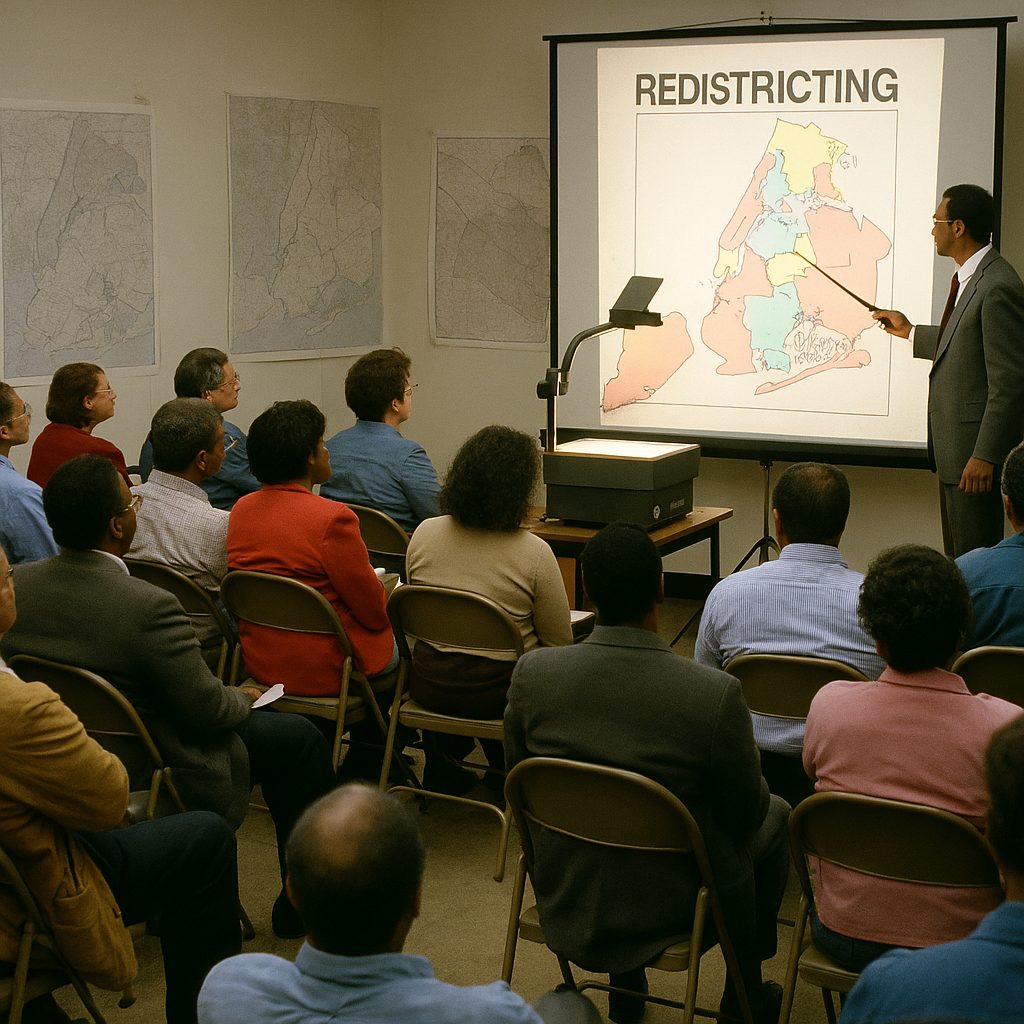
The Editor-in-Chief’s contributions span decades of movement history—from leading grassroots New York City community activism, where he led a campaign that used redistricting as a community organizing strategy to mobilize African American, Latino, African Caribbean, and Asian American communities to collectively build a unified front that fundamentally reshaped the city’s balance of power, to his extensive work within the Southern organizing tradition, and onward to modern digital mobilization. Always rooted in rigorous documentation and future-ready infrastructure, he has used collaborative design to build archival systems that connect historical records to actionable advocacy, ensuring that every resource on this platform serves as an honest, complete, and actionable toolkit to empower researchers, educators, organizers, and the people.
✍️ BlackPolitics.org | Editor-in-Chief Empowering communities through data, history, and collaborative action