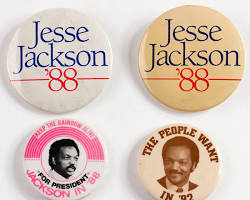
A vintage campaign button from the historic 1988 presidential run, symbolizing the enduring grassroots legacy of the Rainbow Coalition.
This commentary is a companion reflection to our primary archive, Rev. Jesse Jackson: Architect of Black Political and Economic Power. Please read the original article for full historical context.
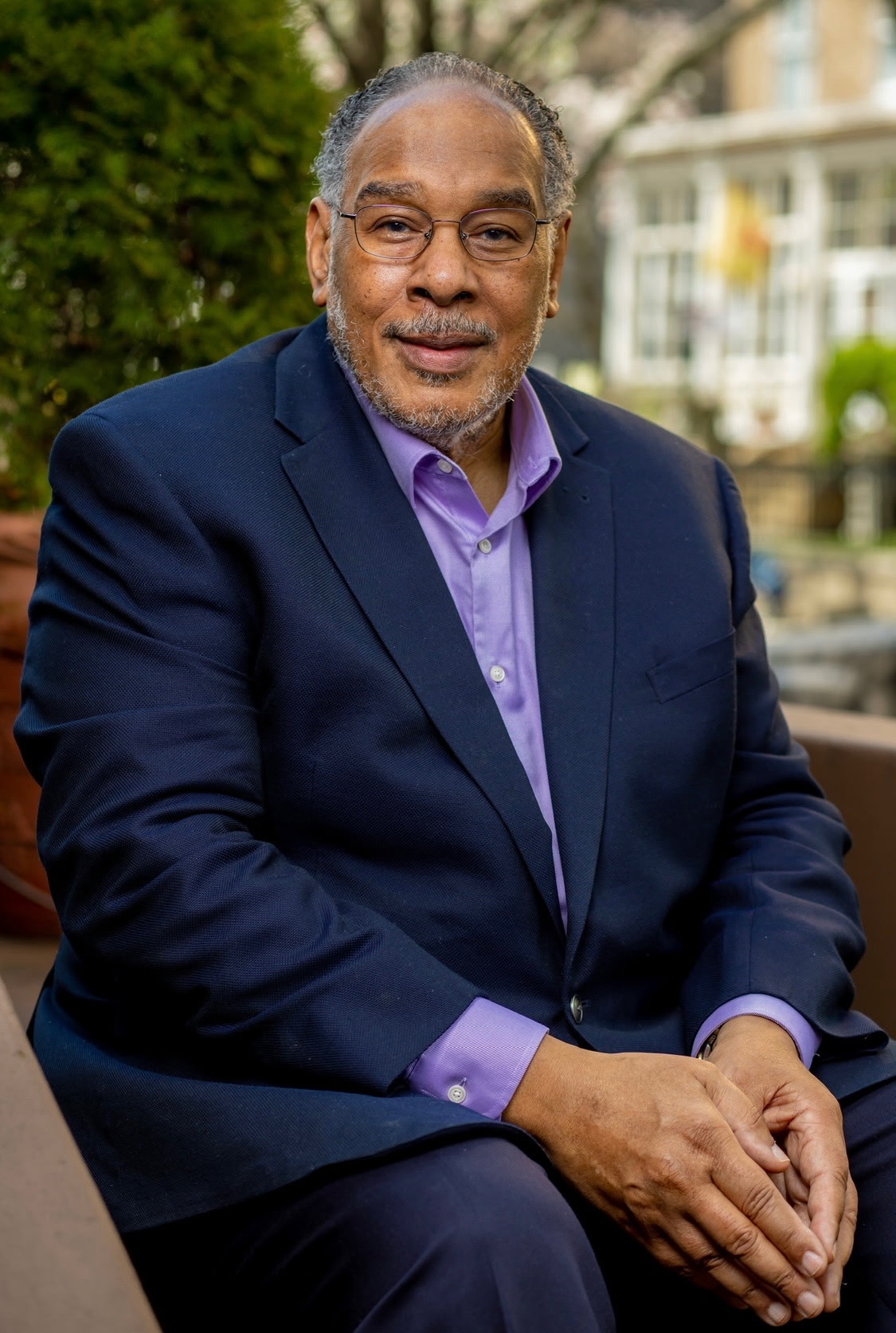
Editor’s Note: The following piece is written by my long-time colleague, Dr. Ellen Spears, former Communications Director of the Southern Regional Council. A direct participant in this historic movement, Dr. Spears served as a Jesse Jackson delegate to the Democratic National Conventions in both 1984 and 1988, and as the state co-chair for the Georgia Jackson campaign in 1988. It is reprinted here with explicit permission granted from East Wind.
To reflect upon the passing of civil rights legend Rev. Jesse Jackson is no small task. He had such a profound and wide-ranging impact on our country and, like many of us, a meaningful impact upon my family.
For many decades, Rev. Jackson’s campaigns, and the movements that he highlighted and supported, were an integral part of political activism in the South. I had the honor of being a Jackson delegate to the Democratic Party conventions in 1984 and 1988 along with serving as a state co-chair for the Georgia Jackson campaign in 1988.
His influence on us was reflected in ways great and small. With the 1988 campaign swirling around us, my daughter turned eight. Unprompted, she created a poster with the image of a white child and a Black child reaching out to hold hands bearing the words, “JESSE JACKSON IS GOING TO WIN.”
Jesse did win. He swept the Georgia primary in 1988, almost doubling his share of the vote from 1984 (21 percent) to win a plurality (nearly 40 percent) of Democratic primary voters, including a modest but significant number of white voters. In fact, Jackson did so well in southern primaries that any other candidate would have been declared the inevitable Democratic nominee.
One standout moment in Jackson’s efforts in Georgia was a visit to a Catholic Church in Marietta—then a majority-white city—where he preached the same message of hope and justice he was delivering in Black churches across the state, to hearty applause.
Looking Back: Why Jesse Jackson in ’88?
Looking back to some of the campaign documents from that year surfaced an excerpt from a September 1987 talk I gave at the Atlanta University Center Philosophical Society:
“He’s the greatest statesman, an accomplished diplomat [having just brought Lt. Goodman home], unmatched orator, brilliant strategist, yet he remains in touch with the needs of people. In the Democratic Party, he’s the only experienced presidential candidate then running. He has the best stands on the issues—on halting the arms race and establishing a sensible foreign policy, a balanced trade policy, and a decent program for farmers.
“He is the only candidate whose candidacy has the possibility of altering the electorate, of changing who chooses, who decides, who rules.”
Strategy Beyond the Presidency
Campaign documents from that era stress that the campaigns were never only about Rev. Jackson winning the presidency, though that was indeed that goal. Central, too, was the importance of strengthening the Black political base, with reapportionment approaching in 1990.
The tens of thousands of Black voters across the South that Rev. Jackson had motivated in 1984 had already succeeded in providing the critical margin of victory for five white Democrats elected to the U.S. Senate from southern states:
- Sen. Wyche Fowler (Georgia)
- Sen. Richard Shelby (Alabama)
- Sen. John Breaux (Louisiana)
- Sen. Terry Sanford (North Carolina)
- Sen. Bob Graham (Florida)
After the campaign, Rev. Jackson urged us, “You need to go pick up the keys,” by which he meant not to be afraid of taking hold of the seats of power, securing leadership spots within the Democratic Party and positions in local and state government.
Hundreds of candidates took up the call. His run for the presidency and the voters registered in those campaigns laid the basis for victories for Black and progressive candidates in southern states at every level. In Georgia alone, his work laid the basis for:
- The historic statewide victory of Michael Thurmond as Labor Commissioner.
- Remarkable, groundbreaking showings by Stacey Abrams in successive gubernatorial races.
- Wins in State Senate and House races, mayorships, county commissions, and city councils too numerous to count.
And, as is only now being widely acknowledged, his vision and audacious action helped make possible President Barack Obama’s historic path to the White House.
Moving Forward With Hope
At this moment of national crisis, we are feeling deeply the losses, among them the absence of this great leader. As we reach out to support the extended Jackson family, reflecting on these victories is one way to celebrate his legacy. We must move forward with hope and bold action to secure the multiracial democracy he worked so hard to achieve.
© Ellen Griffith Spears
Reprinted with permission from East Wind magazine.
1 Sen. Wyche Fowler from Georgia, Sen. Richard Shelby from Alabama, Sen. John Breaux from
Louisiana, Sen. Terry Sanford in North Carolina, and Sen. Bob Graham in Florida.
About The Author