Stacey Abrams Black Voter Turnout Strategy Flipped Georgia for Democrats
Stacey Abrams Showed Power of African American Vote in South
How Stacey Abrams black voter turnout strategy through Fair Fight Action registered 800,000 voters and flipped Georgia creating a Deep South winning strategy for Democrats. In the 2018 election for Governor of Georgia, Stacey Abrams achieved a historical milestone by demonstrating how to mobilize Black voters in the Deep South. Like Jesse Jackson and Barack Obama before her, Stacey Abrams demonstrated the power of the African American base vote in deep Southern states. Many within Democratic party circles often acknowledge the role of African American voters as the “base” of the Party; however, within some of those same circles, there has been a reluctance to make the major investments necessary to educate and mobilize infrequent African American voters to vote their numerical strength on a more consistent basis.
Conservative, Moderate White Democrats or African American Base
On the contrary, there have been several instances where millions of dollars have been spent chasing so-called conservative or moderate white Democrats who ‘may’ vote with the Party while investing little to no resources to turnout or mobilize black voters. While Stacey Abrams did pick up significant non-African American support within Georgia, it is clear that the anchor of her near upset was motivated and mobilized Georgia black voters. Simply put, she and Georgia’s African American base voters put Georgia, “in play”.
 Stacey Abrams used Fair Fight Action Georgia to mobilize Georgia Black Voters
Stacey Abrams Embraced Black Voter Turnout
Stacey didn’t run away from, or try to down play the African American base vote. She embraced it. In so doing, she taught Democratic politicians a crucial lesson about how to win in the Deep South and locations with a large number of African American base voters: embrace your base rather than chase moderate white voters who may never materialize. The lesson is quite simple. If you know which voters constitute your base, then the key to victory is to do everything you can to motivate, mobilize, and turn out your base. Stacey Abrams Black voter turnout strategy mobilized Georgia Black voters.
African American Voters Have Needs Too
Of course, African American base voters are very intelligent voters. They want to win. But to get them to vote in winning numbers, you have to articulate a public policy agenda that addresses their needs and aspirations. The ‘old adage is just as true for African American voters as it is for moderate white Democrats or other voters. To the victor, goes the spoils. If you want to win with black votes, then you have to deliver for the black community.
Many Opportunist Politicians Betray Black Voters
It is on this point where many Democratic politicians fall woefully short. They want to win, but then they appoint officials and enact public policies that are sometimes contrary to the interests of the African American community. A good example of this is the proliferation of democratic district attorneys across the US who get elected with black votes and then fail to prosecute corrupt and murderous police officers who bring harm and death to the African American community.
Stacey Abrams Showed the Path to Victory in Georgia
Democrat Stacey Abrams was poised to be America’s first black woman governor in Georgia during the 2018 midterms. The disenfranchisement of African American voters by her opponent, Brian Kemp, is, in the eyes of many, the reason why Stacey Abrams was not elected Governor of Georgia in 2018. She lost by only one 1.5 percentage points. One of the lessons of her 2018 electoral loss is campaigns also have to mobilize Black voters to to target the office of Secretary of State in those states where there is a sizableAfrican American base.
Even though she did not emerge from that race as Governor of Georgia, she – and future African American candidates for office in the Deep Southern – won.
Fair Fight Action Georgia: Building Long-Term Infrastructure
Days after her narrow 2018 loss, Stacey Abrams founded Fair Fight Action, transforming electoral defeat into a decade-long organizing movement. Rather than accepting the results, she launched a federal lawsuit challenging Georgia’s voting system and built the sustainable infrastructure that would prove critical to future Democratic victories.
Fair Fight Action Georgia addressed a fundamental problem in Democratic organizing: the “feast or famine” cycle where resources flow during competitive races but disappear between elections. By creating year-round organizing capacity, Fair Fight maintained voter engagement regardless of the election cycle.
Working alongside the New Georgia Project nonprofit, Fair Fight Action Georgia built upon the Stacey Abrams black voter turnout strategy to help register an estimated 800,000 new voters between 2016 and 2020—primarily people of color and young voters historically overlooked in Georgia politics. This wasn’t voter registration for a single candidate; it was about building permanent political infrastructure, similar to Countdown 88 in New York City.
The organization also fought aggressively against voter suppression, challenging Brian Kemp’s purge of 1.4 million registered voters and his refusal to recuse himself as Secretary of State while running for governor—a clear conflict of interest that many viewed as enabling voter disenfranchisement.
Abrams’ refusal to concede in 2018 wasn’t about overturning one election—it was about exposing systematic barriers to Black voter participation and building the infrastructure to overcome them in future contests. As she stated at the time, “concession means to acknowledge an action is right, true or proper,” and she refused to legitimize what she viewed as a fundamentally flawed process.
Who is Stacey Abrams?
Born in Wisconsin and raised in Gulfport, Mississippi, Stacey Abrams is a Yale Law School graduate who became Georgia’s House minority leader from 2011 to 2017. At 46 years old during the 2020 election cycle, she had risen to national prominence not through winning statewide office, but through her near-victory and the infrastructure she built to mobilize black voters in its aftermath.
Stacey Abrams’ 10-Year Blueprint for Flipping Georgia
In a 2020 interview with Stephen Colbert on The Late Show, Abrams revealed she had been planning Georgia’s transformation for a decade. She created a comprehensive 21-page strategy deck and traveled with it to garner support from Democratic donors.
“My argument was threefold,” Abrams explained. “First, we had a demographic shift happening that we had to harness. Second, we had an inchoate message for 21st century Democrats that needed to be refined—we had to know what we stood for. And third, we had to build an infrastructure that didn’t rely on every single election but really sought to win no matter who was on the ticket.”
The Stacey Abrams Black voter turnout strategy was comprehensive, investing in races from city council and district attorney positions all the way up to presidential races. But consistency was the key differentiator.
“So many groups have been doing this work for a long time, but it’s feast or famine,” Abrams said. “When there’s a candidate who wants to invest, you’ll get the resources, and then you’re just struggling to get by. We were able to create sustainability in the infrastructure, which meant we could win again and again and build up to this big victory in November.”
The 2020 Validation: Biden Flips Georgia
Abrams’ strategy reached full fruition in 2020 when President-elect Joe Biden narrowly won Georgia—the first Democratic presidential victory in the state since Bill Clinton in 1992. When Biden was declared the winner, a crowd outside the White House shouted “Stacey Abrams,” and her name trended on Twitter as Biden inched ahead of President Trump.
Days after her 2018 gubernatorial loss, she had formed Fair Fight Action, launched a federal lawsuit seeking an overhaul of Georgia’s voting system, and continued building the infrastructure that would eventually flip the state blue.
Senator Doug Jones told Politico that Democrats should use Abrams’ work in Georgia as a model for the entire party. “The Democratic Senatorial Campaign Committee and the Democratic Congressional Campaign Committee spend too much time investing in candidates and not the electorate,” Jones said. “They don’t invest in House districts, they don’t invest in states.”
Congresswoman Nikema Williams, the first Black woman to serve as chairwoman of the Democratic Party of Georgia and successor to the late civil rights leader John Lewis, emphasized that success came from empowering voters, not just one candidate. “People talk about Stacey Abrams. She absolutely deserves the credit, but what Stacey has said time and time again, this is not about one person, one candidate, or one election cycle,” Williams said. “It’s about giving the power back to people who felt unheard and unseen for far too long.”
Stacey Abrams and Andrew Gillum Showed Viability of Statewide Black Candidates in South
The Stacey Abrams candidacy – combined with the breakthrough candidacy of Florida’s Andrew Gillum – help to dismantle the implied fear of many Democratic observers that black nominees cannot be viable statewide candidates, especially in the Deep South.
Few Black Statewide Elected Officials
In general, despite the election of Barack Obama and the near proportional representation of blacks in the U.S. House of Representatives, blacks are underrepresented in statewide offices like governor, U.S. Senator, secretary of state, and state attorney general.
Not Much Change Since Reconstruction in Black Statewide Office Holding
In the more than 150 years since Reconstruction, there were only two elected black governors, 14 lieutenant governors, six elected U.S. senators and, until election day 2019, four state attorneys general. On election evening 2018, four African- Americans won races to serve their as attorneyh general and one African-American gained a lieutenant governor’s seat.
Voting Rights Litigation and Redistricting Responsible for Major Growth of Black Elected Officials
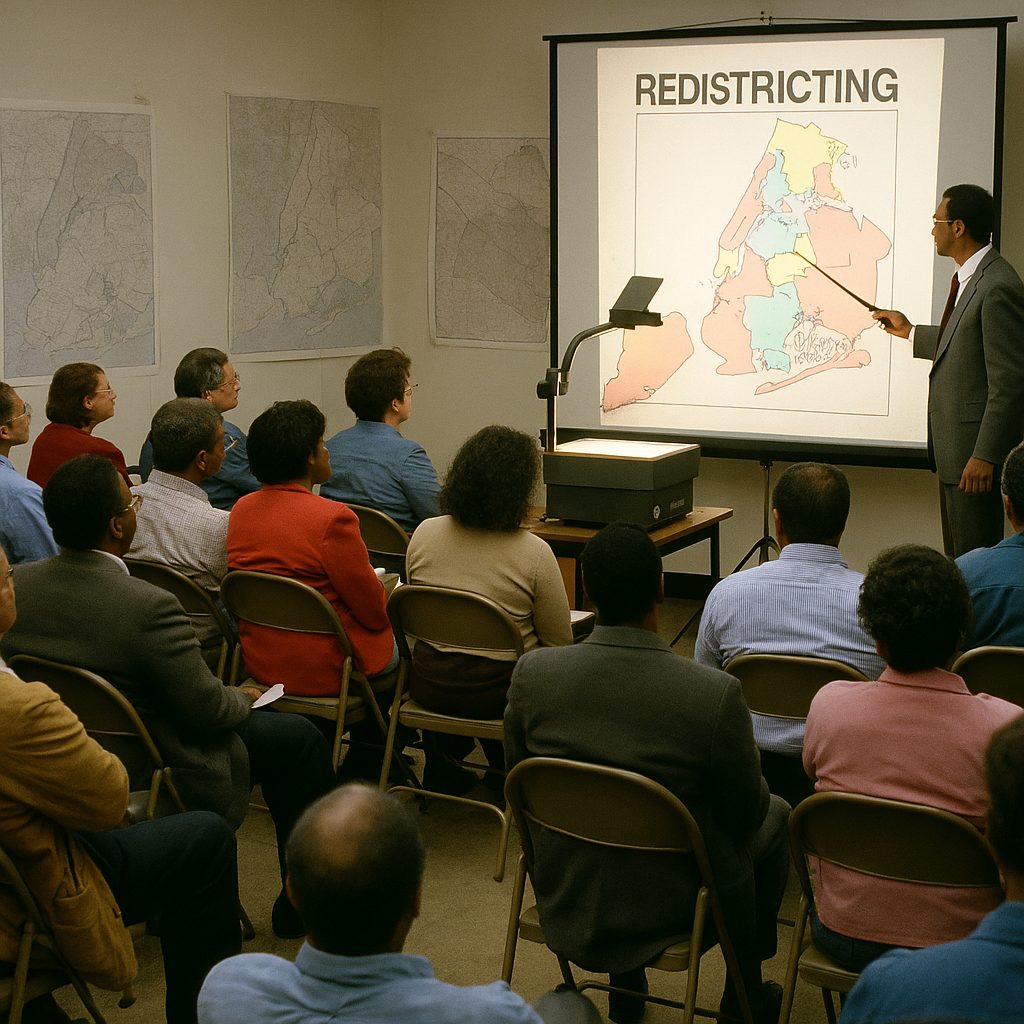
Scholars attribute portion of the current disparity to demographics. While there are congressional districts with huge African American base populations which have a history of electing black representatives, no state currently has a majority black voting age or total population that would likely do the same. The large increase in African American members of Congress, state legislatures, and local municipalities following the 1990 census was a direct result of litigation by voting rights attorneys and the deliberate drawing of majority black congressional, state legislative, and county commission or city council districts by voting rights technical experts.
Because no state has a majority African American base population, scholars and political analysts have opined about the likelihood that nonblack voters would be willing to vote for black candidates statewide.
More Racially Polarized Voting in Southern States
States like Massachusetts and Virginia, which have larger white Democratic populations, have elected African-American governors. However, this has been less likely to happen in the Deep South, where racially polarized voting is more stark and gives the advantage to Republican, typically white, candidates. For these reasons, African-American Democratic applicants for statewide office in Georgia, as in other areas of the Deep South, have often faced skepticism.
Established Black Elected Officials Decided Not to Run Statewide
Often, seasoned black candidates, such as former Atlanta Mayor Shirley Franklin, have chosen not to run for statewide office. The same was true of Marc Morial, former mayor of New Orleans.They decided not to waste political capital on a race that would be hard for any African American or Democrat to win. While former Atlanta mayor, Maynard Jackson, did make an early run for the US Senate in 1968, he later concentrated on the majority black City of Atlanta. Maynard realized the significant challenges inherent in an African American being elected statewide at that time.
Moderate White Democrats Lost
In lieu of willing African American candidates, Georgia Democrats have often nominated centrist or moderate white Democrats such as, Michelle Nunn (daughter of former US Senator, Sam Nunn), Roy Barnes, or Jason Carter. They wished such individuals could bring white suburban voters back to the Democratic Party. Those whites began leaving the party following the civil rights movement, and helped to deliver the governor’s mansion to the Republicans in 2002. With the exception of Roy Barney, who won a single term as Georgia Governor in 1999, those centrist or moderate white Democrats were unable to excite the African American base of the party. Likewise,they also failed to deliver so-called white moderates. These moderate white Democratic candidates ended up losing.
Stacey Abrams Offered A New path
In the context of the failure of moderate white democrats before her, Stacey Abrams offered a new path. She made a direct appeal to Georgia’s 32.4 percent African American population. Stacey Abrams added Latinos to her coalition as well. Latinos make up just shy of 10 percent of Georgia’s population. Asian Americans make up also 4.5 percent of the population, and Native American, another .5 percent.
The VP Consideration and Critics
Abrams’ rising profile led her to openly campaign to become Joe Biden’s running mate in 2020. In an April interview for Elle magazine, she made an unabashed case: “I would be an excellent running mate.” Her candid ambition, however, grated on some fellow Democrats. Representative William Lacy Clay of Missouri said at the time, “What is somewhat offensive to me is when you are marketing yourself as a VP candidate. For you to be out there marketing and putting on a PR campaign that way, I think it’s inappropriate.”
Despite being passed over for Senator Kamala Harris, Abrams’ work proved pivotal. Biden ultimately chose another Black woman for the ticket, but it was Abrams’ organizing that helped deliver Georgia Black voters and Georgia’s electoral votes. As Senator Chris Coons, a close Biden ally, noted: “We’ve got a very strong ground game in Georgia because of the leadership of Stacey Abrams.”
A key criticism Abrams faced was that she had never won a statewide election—a weakness that didn’t diminish her impact on Democratic infrastructure building. President Trump himself scoffed at her influence, telling a Mississippi rally: “They had President Obama, they had Michelle Obama, they had Oprah Winfrey, they came in, and all [Kemp] had was Donald Trump.”
Yet some experts noted that Abrams didn’t work alone. Political science professor David Broockman of UC Berkeley tweeted: “Lots of people seem to think Stacey Abrams led an army that registered a million people or something. The truth seems more straightforward: in 2016 Georgia implemented automatic voter registration.” A Brennan Center for Justice study found that Georgia’s automatic voter registration law—which registers residents getting driver’s licenses—contributed to a 94 percent increase in voter registration.
Georgia’s Population 47.2 Percent People of Color in 2018
Anchored by a people of color population that is over 47 percent, one can clearly see the sense of the strategy followed by Stacey Abrams. She also received significant support from metro Atlanta’s large LGBTQ population and organized labor. While many beleive she was cheated out of an electoral victory in 2018, Stacey Abrams showed Democrats the path to victory. The Stacey Abrams Black voter turnout strategy will reap dividends in the long run for Democrats and for her, perhaps as early as 2022.
Stacey Abrams New Campaign Blueprint
Stacey Abrams proposed expanding the Democratic Party foundation in Georgia through her black voter turnout strategy: an expansive voter registration campaign combined with intensive voter mobilization designed specifically to drive up turnout among communities of color. Her campaign committed to a field program of canvassing and telephone calling or phone banking procedures. Organized labor uses such a model. Don Green and Alan Gerber, among others, have also demonstrated how canvassing and live phone banking raises voter turnout. Their revised scientific approach is entitled, Get Out the Vote: How to Increase Voter Turnout.
New Base of Voters of Color
Abrams radically asserted a technique premised not on trying to woo back whites who had left the Democratic Party long ago, but focused on building a new base of voters of color, whose population in Georgia is growing. She challenged a practice among many white democratic operatives which totally frustrates African American campaign professionals as well as African American candidates and elected officials.
Invest Resources to Educate and Mobilize Black Voters
Democrats historically failed to dedicate the necessary resources to educate and mobilize Black voters—a mistake the Stacey Abrams black voter turnout strategy deliberately avoided by investing heavily in Georgia Black voters and communities.The moderate white Democrats and white Democratic operatives take these African American base voters for granted, assuming that black voters have no place else to go. The fallacy of that assumption is that sizable chunks of African American base voters choose to stay home because the candidates don’t excite them and resources aren’t invested to mobilize them around a public policy agenda which affects their daily lives.
Don’t Take Black Voter Turnout and Black Voters for Granted
Abrams was challenging the practice that political scientist Paul Frymer referred to. In Uneasy Alliances: Race and Party Competition in America, Frymer argues that Democrats assume that they do not need to target campaign messages to African American base voters because data shows that approximately 90 percent of these vote Democratic.
Democrat Stacey Abrams Sees The Power of Black Voter Turnout
Instead, Abrams viewed the diversity of the Democratic base in Georgia and argued that due to their solid Democratic voting behavior, African American base voters deserved additional campaign interest.
A Community No longer Overlooked
By focusing on African American, Latino, and Asian American outreach through Fair Fight Action Georgia and allied organizations, Abrams turned the notion of electoral capture on its head, arguing that Democrats could yield more black votes if they campaigned in black communities.She saw the tens of thousands of young black voters who have historically been overlooked and ignored. She appealed to them. Even so, despite the hundreds of thousands of African Americans base voters mobilized by Stacey, the election showed that there are still many Georgia black voters left to be claimed.
Stacey Grew the Electorate
Moreover, as a serious candidate of color, Abrams also challenged the idea that only centrist or conservative white individuals could come up with a formidable political advertising campaign coalition in Georgia. By growing the electorate through voter registration and taking painstaking efforts to mobilize brand-new and longstanding voters, Abrams earned more votes than previous Democratic gubernatorial candidates. The Stacey Abrams strategy to turn out the black vote was vindicated.
Stacey Out Performed Jason Carter and Michelle Nunn
Proportionally, Abrams earned slightly more support among white voters than Jason Carter, the last of the moderate white Democrats to be nominated for Governor in Georgia. Thus, she outperformed her white Democratic predecessors using a wide-ranging and inclusive strategy. So, even though Abrams lost that election battle, she still won in many important ways.
To be certain, as a black woman, Abrams was subjected to especially racist and bigoted attacks. Were it not for the voter suppression techniques and strategy used against her and African American base voters, she would have won the race. All said and done, the Stacey Abrams electoral performance in the 2018 Georgia gubernatorial election shows that black candidates in the Deep South can run effective, highly competitive campaigns.
Democratic candidates still face challenges running in solidly Republican states, but Abrams has provided a template for showing how black Democrats can be competitive, and eventually win, even in parts of the Deep South.
As such, the results of the 2018 election demonstrate that the implied fears about nominating serious black prospects for statewide positions in the Deep South are misplaced. While party continues to be a disadvantage for just about any Democrat seeking office in Republican-leaning states, African American candidates for statewide office like Stacey Abrams and Andrew Gillum have displayed how they can navigate racial landmines and partisan disadvantages to run competitive races.
Instead of assuming that black candidates will under perform their white counterparts running for statewide office, perhaps we should focus our attention on rooting out institutional burdens that may make equal usage of the ballot more challenging.
The Abrams Blueprint: A Roadmap for Democratic Success
Stacey Abrams proved that investing in the African American base isn’t just good politics—it’s the winning strategy Democrats overlooked for decades. Rather than chasing moderate white Democrats who abandoned the party generations ago, Abrams focused on communities of color who had been taken for granted. Through Fair Fight Action and sustained organizing, she demonstrated that building permanent infrastructure—not relying on election-year mobilization—creates lasting political power.
The 2020 Georgia victory validated her approach. Her Stacey Abrams black voter turnout strategy didn’t just flip one state blue; it provided a blueprint for Democrats across the Deep South. By focusing on voter registration, fighting suppression, and delivering on policy promises to Black communities, Abrams showed that Democratic victories in conservative states aren’t mirages—they’re achievable when parties mobilize Black voters rather than chasing voters who will never return.
The question now isn’t whether Abrams’ strategy works. Georgia proved it does. The question is whether Democratic parties in other Southern states will learn from her success or continue wasting resources on strategies that have failed for decades.
Frequently Asked Questions
How did Stacey Abrams increase Black voter turnout in Georgia?
Stacey Abrams used a multi-pronged approach through Fair Fight Action: registering 800,000 new voters (primarily people of color), building year-round organizing infrastructure instead of relying on election-year mobilization, fighting voter suppression through litigation, and investing heavily in canvassing and phone banking in Black communities. Unlike previous campaigns that took the African American base for granted, Abrams made Black voter turnout the centerpiece of her strategy.
What is Fair Fight Action and what does it do?
Fair Fight Action is the voting rights organization Stacey Abrams founded days after her 2018 gubernatorial loss. It addresses voter suppression through litigation, registers voters year-round, builds sustainable organizing infrastructure, and fights for voting rights reforms. Fair Fight helped register 800,000 new Georgia voters between 2016 and 2020, contributing to Biden’s 2020 victory in the state.
Why did moderate white Democrats fail in Georgia before Stacey Abrams?
Moderate white Democrats like Roy Barnes, Jason Carter, and Michelle Nunn failed because they tried to win back white suburban voters who had left the Democratic Party decades ago while neglecting to mobilize Black voters who actually support Democrats. They couldn’t excite the African American base and also failed to attract the moderate whites they were chasing—losing on both fronts. Abrams succeeded by doing the opposite: fully investing in the African American base and growing the electorate through communities of color.
How did Stacey Abrams’ strategy differ from previous Democratic campaigns?
Previous campaigns took Black voters for granted, assuming they had “nowhere else to go,” and instead spent millions chasing moderate whites. Abrams flipped this strategy: she invested heavily in Black communities, registered hundreds of thousands of new voters of color, built permanent infrastructure through Fair Fight Action, and made the African American base the foundation rather than an afterthought. She also refused to run from her progressive positions to appeal to centrist whites.
Can the Abrams strategy work in other Southern states?
Yes. The key is investing in the African American base, building year-round organizing infrastructure, registering new voters of color, and fighting voter suppression. States with significant Black populations like North Carolina, South Carolina, Mississippi, Alabama, and Louisiana could follow Georgia’s model. However, it requires sustained investment over years—not just election cycles—and Democrats must deliver on policy promises to Black communities to maintain trust and turnout.
About The Author