Separatist and Unarmed Self-Defense in Black political history centers on institutional sovereignty, religious nationalism, and community-based protection as strategic responses to systemic exclusion.
“Two mass movements were developing,” wrote Max Stanford — “one integrationist/nonviolent in the South, and the other separationist/self-defense in the North.” The Southern movement drew strength from the Black Christian Church and moral appeals to the nation’s conscience. The Northern movement, led by the Nation of Islam and shaped by early Malcolm X, rejected integrationist logic altogether. It demanded sovereignty — of mind, body, and institution.
Institutional Sovereignty
But this current did not begin in the 1960s. Its roots run deep. From the founding of the African Methodist Episcopal Church in 1816 to the emigrationist sermons of Bishop Henry McNeal Turner, Black communities have long turned to religious and institutional separation as a strategy of survival. In the late 19th century, towns like Mound Bayou, Mississippi, and schools like Tuskegee Institute modeled economic self-reliance and communal control. In the early 20th century, Marcus Garvey’s UNIA and the Moorish Science Temple of America offered visions of Black nationhood, spiritual sovereignty, and global solidarity — laying critical groundwork for what would follow.

Nation of Islam Separatist and Unarmed Self-Defense
The Nation of Islam emerged from this lineage. Founded in Detroit in 1930, it fused Garveyite nationalism, Islamic theology, and the Moorish Science Temple’s emphasis on identity reclamation. It offered Black Americans a new name, a new cosmology, and a disciplined institutional framework — one that refused dependence on white society. Its schools, businesses, and paramilitary structure modeled a form of unarmed self-defense rooted in religious authority and communal order.
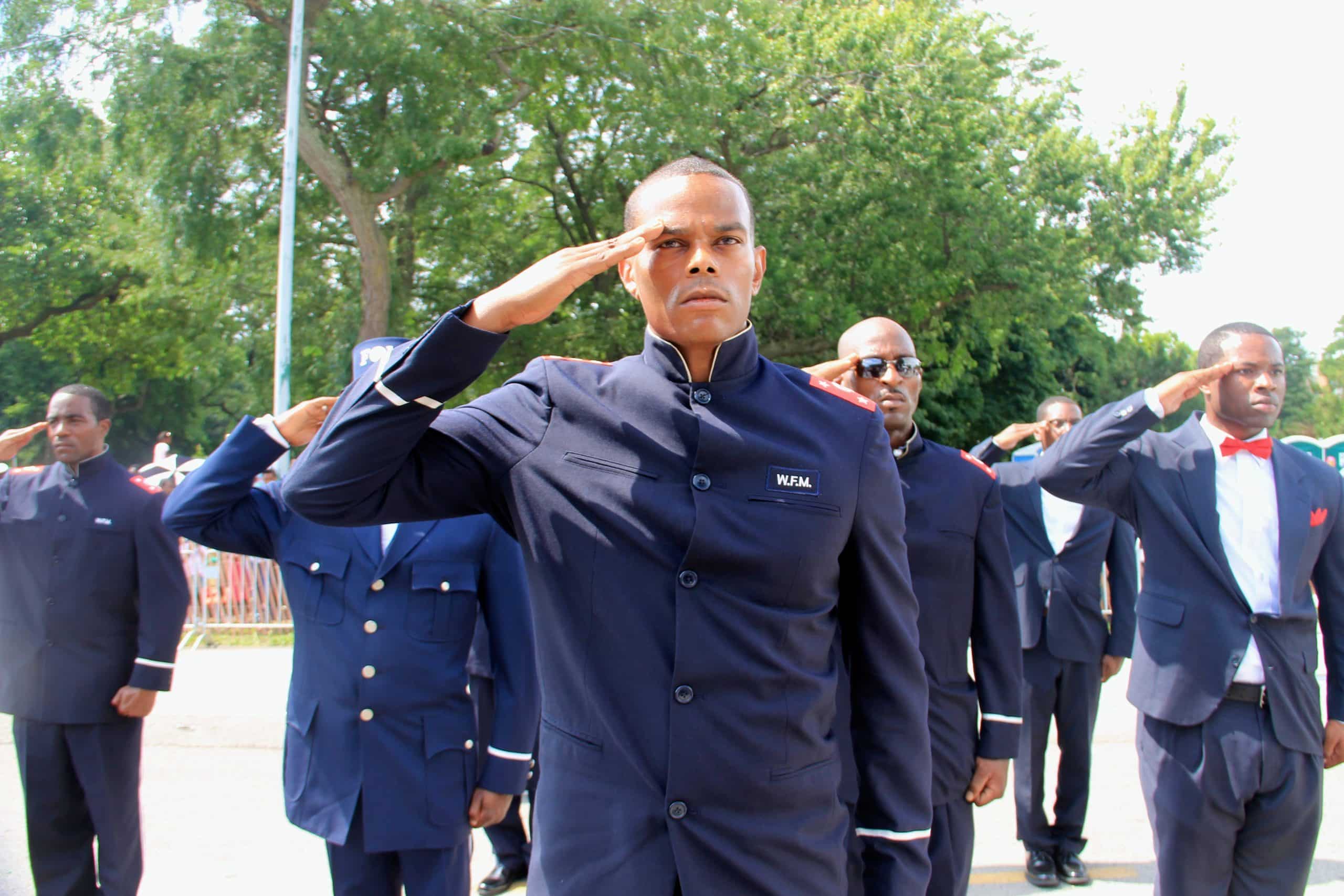
The Nation of Islam built power through discipline, separation, and control. The Fruit of Islam, its all-male security wing, embodied this ethos — trained in martial arts discipline, immaculately uniformed, and tasked with protecting NOI spaces without reliance on state police. The Fruit of Islam exemplified unarmed self-defense as a disciplined, community-controlled alternative to state policing—protecting Black institutions while embodying the Nation of Islam’s ethos of sovereignty, order, and self-reliance.
Malcolm X became its most electrifying voice. He fused theological critique with political clarity: “We didn’t land on Plymouth Rock. Plymouth Rock landed on us.” His early speeches rejected integration as a trap and framed separation as a necessary condition for dignity and survival. Even after breaking with the Nation, Malcolm’s Organization of Afro-American Unity carried forward the demand for sovereignty — linking Black freedom to international law, cultural reclamation, and human rights.
This current did not seek access — it sought autonomy. It asked what freedom meant when the vote was denied, when violence was constant, and when integration offered no safety. The answer was institutional sovereignty: build your own, protect your own, define your own. From the Nation of Islam to the Republic of New Afrika, from independent Black schools to Afrocentric curricula, this current insisted that survival required separation — not as retreat, but as strategy.
It was not apolitical. It was prefigurative. It built the institutions that democracy refused to deliver. And it laid the groundwork for future movements — from Black Power to cultural nationalism — that redefined what liberation could look like.
Timeline: Milestones in Separatism and Unarmed Self-Defense (1816–1979)
| Year | Event | Impact |
|---|---|---|
| 1816 | African Methodist Episcopal Church founded | First independent Black denomination; models religious and institutional sovereignty |
| 1887 | Mound Bayou, Mississippi established | All-Black town founded by formerly enslaved people; economic self-sufficiency as protection |
| 1890s–1915 | Bishop Henry McNeal Turner and Black emigrationism | Advocates African repatriation as political strategy; reframes freedom as geographic separation |
| 1914 | Marcus Garvey founds UNIA | Mass movement for Black pride, economic independence, and global Black nationhood |
| 1913 | Moorish Science Temple of America founded | Introduces Islamic-inflected theology, identity reclamation, and spiritual sovereignty |
| 1930 | Nation of Islam founded in Detroit | Fuses Garveyism and Moorish teachings; builds disciplined institutions for Black autonomy |
| 1954–1964 | Malcolm X leads NOI Mosque No. 7 in Harlem | Builds NOI’s Northern base; becomes national voice for separation, discipline, and unarmed self-defense |
| 1964 | Malcolm X founds Muslim Mosque, Inc. after break with NOI | Begins transition from religious separatism to global Black nationalism |
| 1965 | Organization of Afro-American Unity (OAAU) launched | Proposes UN petition for Black human rights; links sovereignty to international law |
| 1968 | Republic of New Afrika founded in Detroit | Calls for independent Black nation in the South; blends theology, land reclamation, and self-defense |
| 1970s | Rise of independent Black schools and Afrocentric curricula | Builds educational sovereignty; rejects Eurocentric models and integrationist pedagogy |