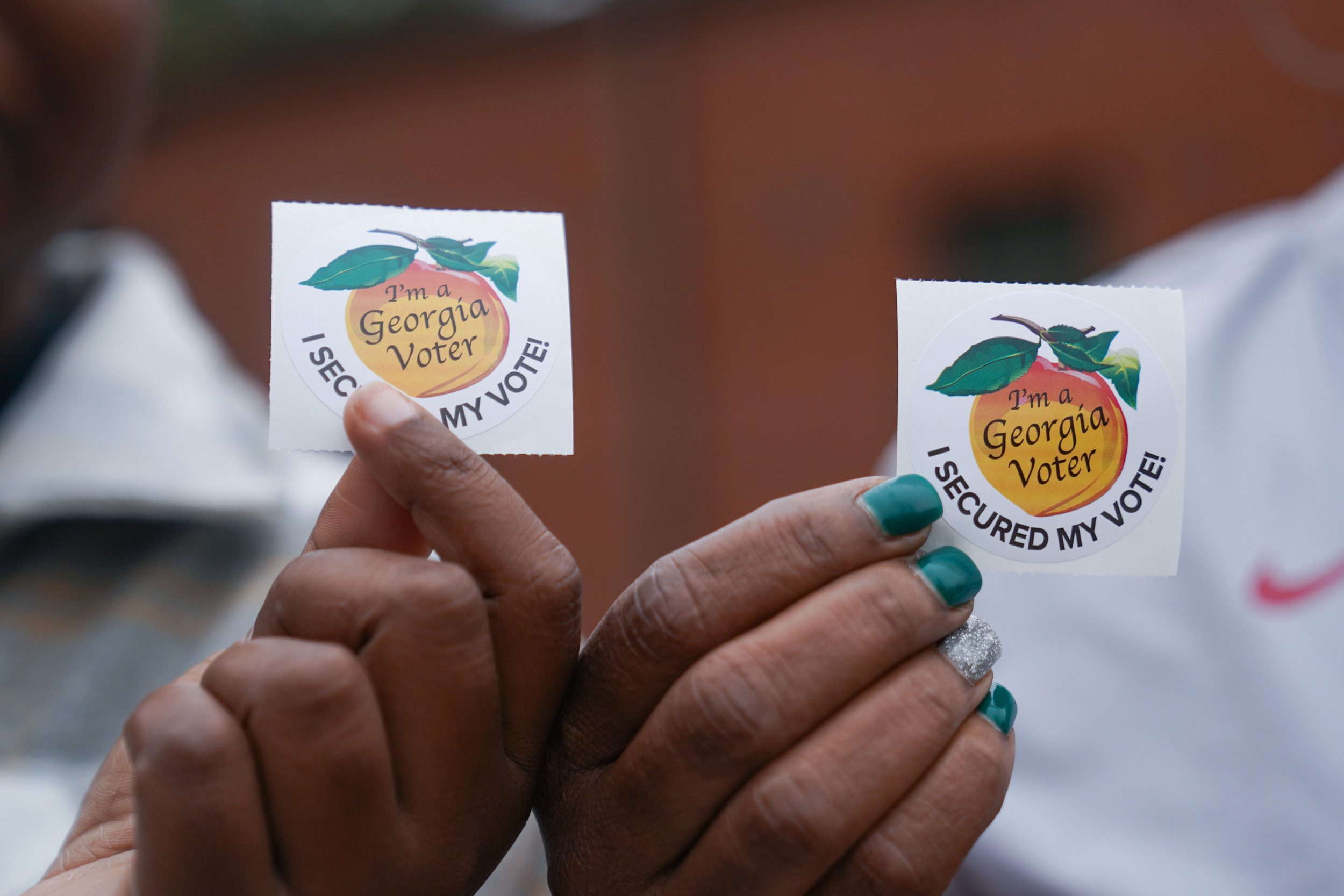
Give Republican state legislators their due. They work hard to make it as burdensome as possible for African Americans, Hispanics, Native Americans, and college students to vote in both state and federal elections.
To accomplish this, they first have to pretend that voter fraud is widespread. That is hard enough, since the data conclusively show voter fraud to be exceedingly rare. Then, they must claim that their actions are the only way to restore “election integrity.” That’s even harder, since selectively disenfranchising huge swaths of the eligible voting population would seem to undermine, not promote, election integrity. Finally, they need to pretend that only illegal voters are affected. For that claim, the tens of thousands of disenfranchised U.S. citizens in states like Kansas and Georgia stand awkwardly in the way.
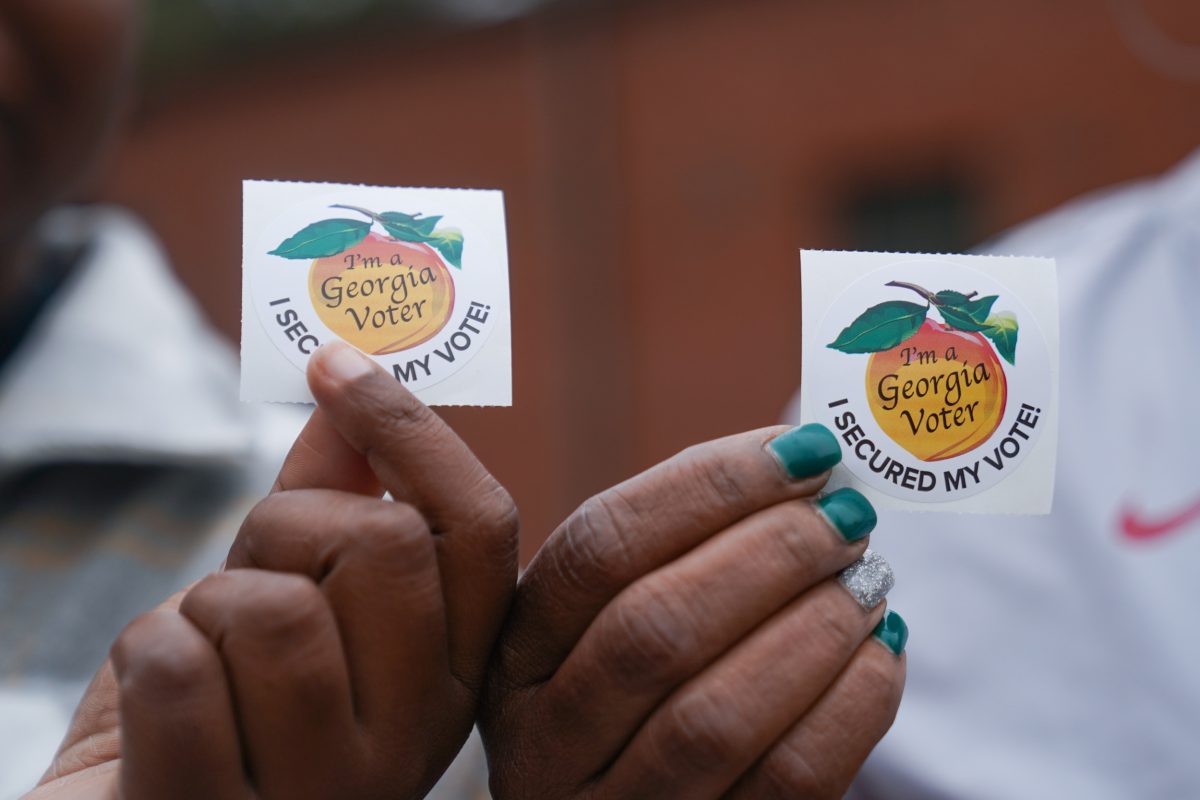
Megan Varner/Getty Images
Now that poll taxes and literacy tests are illegal, suppressing votes is harder still. But Republican legislators have been equal to the task.
Here are their nine favorite tricks:
1. Make voter registration harder.
Several Republican-controlled states have taken aim at voter registration drives, which account for disproportionately high percentages of Black and Hispanic registrations. A federal appellate court had to strike down a North Carolina law that intentionally targeted would-be Black registrants with “surgical precision.”
2. Purge registered voters.
Georgia Secretary of State Brian Kemp, running (successfully) for governor in 2017, purged 107,000 eligible voters from the rolls. In Ohio, failing to return a postcard from the state can cost you the right to vote.
3. Require photo IDs.
Although voter impersonation is exceptionally rare (more Americans are struck by lightning), many states require voters to present photo IDs. This requirement disproportionately affects racial minorities. At least four solid red states accept gun licenses but not university IDs. Not coincidentally, college students vote overwhelmingly for Democrats while Republicans are more than twice as likely as Democrats to own guns.
4. Require documents that prove U.S. citizenship.
To vote in federal elections, individuals already must swear under penalty of perjury that they are U.S. citizens. Non-U.S. citizen voting, therefore, is virtually unheard of. Who would risk criminal prosecution, imprisonment, and deportation for the miniscule chance that their one vote would swing an election? Nonetheless, in 2022, Republican bills requiring voters to document their U.S. citizenship were pending in at least 10 state legislatures. The U.S. House has now passed a bill that would require such documentation nationwide.
But how do you prove you are a U.S. citizen? More than 21 million Americans—predominantly the poor, African Americans, and young people—lack birth certificates and passports. For married women who have changed their surnames, even birth certificates would be insufficient. Moreover, since most of us don’t pack birth certificates or passports when we go to shopping malls, political demonstrations, parks, outdoor concerts, places of worship, or the like, requiring documentary proof of U.S. citizenship would make voter registration drives impossible.
5. Slash early voting.
Democrats vote early in much greater numbers than Republicans. So Republican legislatures have shortened early voting periods in states all across the country; North Carolina and Wisconsin are among the more extreme examples. In a decades-old tradition called Souls to the Polls, Black churchgoers have resisted voter suppression by traveling together to the polls after Sunday services. Republican legislatures in North Carolina, Wisconsin, and Georgia have responded by drastically curtailing Sunday voting.
6. Limit ballot drop boxes.
Ballot drop boxes avoid long postal delays. They are hard as a rock, safely located, and secure against fraud. Their open hours especially ease the burden on working class voters, particularly those who work nights or irregular shifts. They are used disproportionately by Black voters. But a rash of Republican-led states have banned them entirely or severely shrunk their numbers. In 2020, Texas’ Harris County—which was 64 percent Black or Hispanic—had one drop box for its 4.7 million people.
7. Restrict third-party delivery of absentee ballots.
Third parties frequently deliver other people’s ballots. There is no evidence of widespread abuse, and they are a boon to the elderly and the disabled. Native Americans on tribal reservations sometimes live hours from the polls and lack mail service. Black churches often gather their congregants’ ballots and deliver them en masse. Republican-controlled states have responded by imposing particularly severe restrictions.
8. Disenfranchise citizens with criminal convictions.
The states vary widely as to which crimes disqualify citizens from voting and when voting rights may be restored. As of 2024, some 4,000,000 U.S. citizens were disenfranchised because of criminal convictions, roughly half of them even after fully serving their criminal sentences. A disproportionate number have been African American; five states, all Republican-controlled, have disenfranchised more than 10 percent of their African American adults because of criminal convictions.
9. Selectively close polling stations.
Since 2013, when the Supreme Court effectively gutted the heart of the Voting Rights Act, states with hallowed histories of racial discrimination in voting have ravenously reduced the number and hours of their polling stations—disproportionately in counties with large African American populations. Among the results are long lines and major transportation issues for the affected voters. In 2018, the average wait time in precincts where 90 percent of the populations were white was only 5.1 minutes; in contrast, in precincts where over 90 percent of the voters were nonwhite, the average wait time was 32.4 minutes. In some precincts, wait times exceeded five hours. In 2016, these problems induced an estimated 560,000 eligible voters to sit out the election. Republican strategists have also called for closing polling stations on college campuses, especially in swing states with large in-state student populations.
This is not democracy.
Stephen Legomsky is the John S. Lehmann university professor emeritus at the Washington University School of Law. He is the author of Reimagining the American Union: The Case for Abolishing State Government (Cambridge University Press, 2025). Professor Legomsky served in the Obama administration as chief counsel of U.S. Citizenship and Immigration Services and later as senior counselor to Secretary of Homeland Security Jeh Johnson.
The views expressed in this article are the writer’s own.
About The Author