🏛️ Black Politics Advisory Council (In Formation)
The Black Politics Advisory Council is a growing body of veteran organizers, scholars, and civic leaders who help guide the editorial mission, archival strategy, and public engagement of BlackPolitics.org. They share a commitment to preserving the untold stories of Black electoral and grassroots movements — especially those active from the 1970s through the 1990s — and to documenting related efforts beyond that era.
These decades saw the rise of transformative campaigns, institutions, and coalitions that shaped Black political power. Yet much of this history remains underrepresented online. While the 1960s civil rights era has received extensive digital attention, the movements that followed — often more localized, strategic, and coalition-driven — remain less visible in the public record. BlackPolitics.org is committed to recovering and preserving these stories, ensuring they are accessible to future generations.
Formed to ensure historical integrity and strategic relevance, the Black Politics Advisory Council brings deep experience in voting rights, electoral politics, movement-building, philanthropy, and civic infrastructure. As the platform evolves, Black Politics Advisory Council members will help shape its direction, mentor emerging leaders, and ensure that Black political history remains preserved, searchable, and actionable.
🔥 Mission Statement
BlackPolitics.org documents, preserves, and activates the political legacy of Black communities across the United States. The Black Politics Advisory Council and Editorial Leadership team guide the platform’s historical framing, public engagement, and strategic direction — ensuring that Black political history is not only archived, but mobilized.
Each member brings decades of experience in organizing, scholarship, public service, and movement-building. Their lived histories shape our editorial priorities and educational tools.
🧭 Stewarding the Legacy of Black Political Power
Black Politics Advisory Council members serve as strategic guides, historical stewards, and movement architects. They help shape the archive’s direction, uphold editorial integrity, and connect us to the lived experience of the era we seek to preserve.
🧑🏽🏫 Black Politics Advisory Council Members
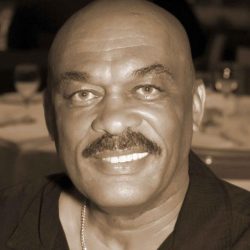
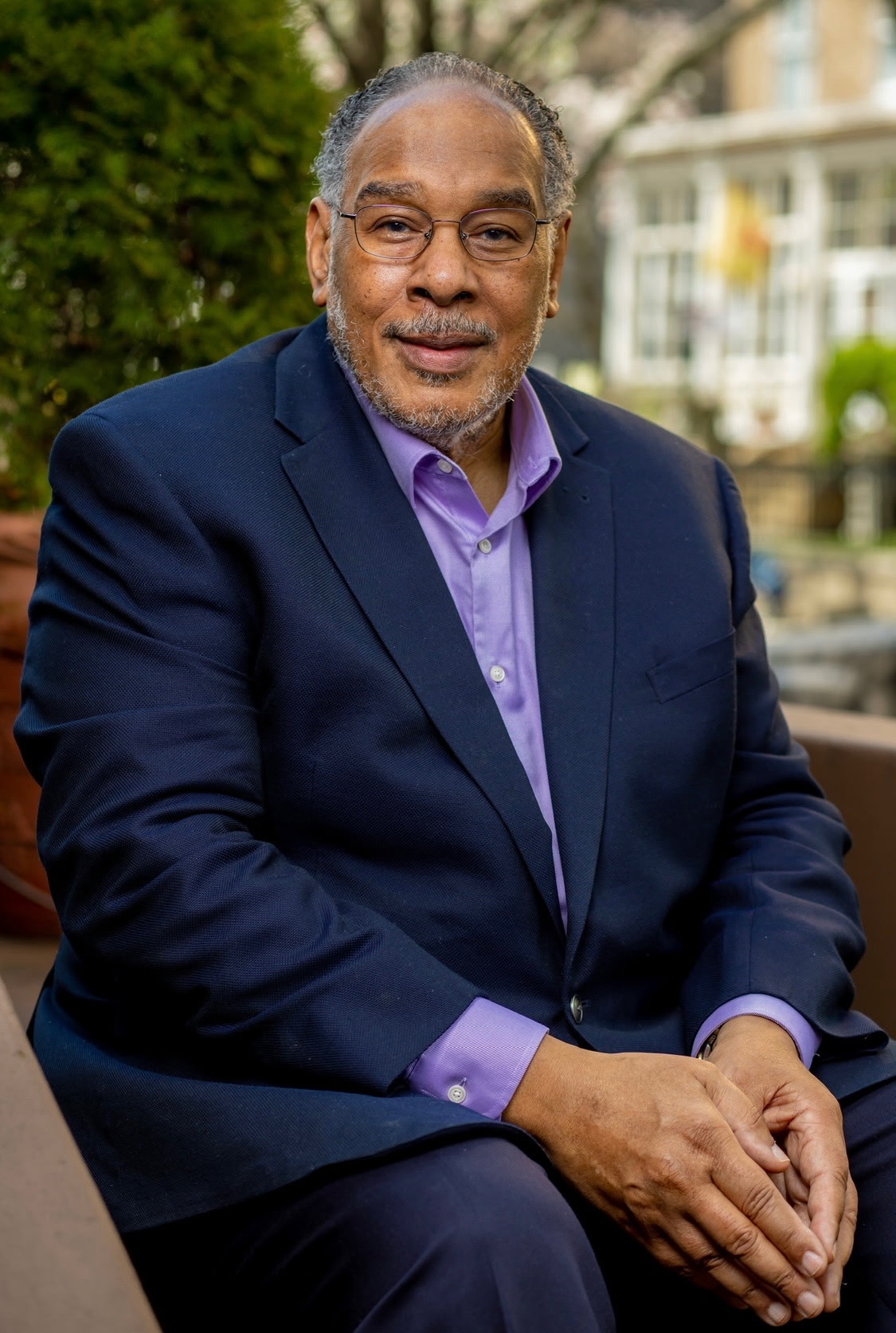
Selwyn Carter
Editor-in-Chief, BlackPolitics.org; Voting Rights Strategist, Political Strategist, and Civic Infrastructure Builder
Selwyn Carter is a veteran strategist whose career spans decades of political leadership, voting rights advocacy, community organizing and activism, and civic infrastructure development across the South and Northeast. His work has shaped redistricting policy, electoral access, and grassroots mobilization at every level of government.
As Director of Voting Rights Programs at the Southern Regional Council, Carter advanced fair redistricting, civic education, and coalition-building across the South — helping local leaders navigate complex legal terrain and build durable civic capacity. During the 2000 Florida presidential recount, he played several critical roles – gathered voter affidavits in West Palm Beach; served as a recount observer in Miami-Dade and Highlands; and helped to organize mass community mobilizations in Palm Beach, Broward, and Miami-Dade counties, all part of protecting the rights of Black and other voters in one of the most contested elections in U.S. history.
For over two decades at the AFL-CIO, Carter led political education and mobilization efforts across the South. He directed state and local campaigns, trained grassroots activists, and coordinated voter protection initiatives. His work included issue-based, labor, and legislative campaigns, as well as multi-state lobbying strategies that influenced members of Congress, state legislatures, and city councils. His leadership helped shape policy outcomes and build sustainable civic infrastructure.
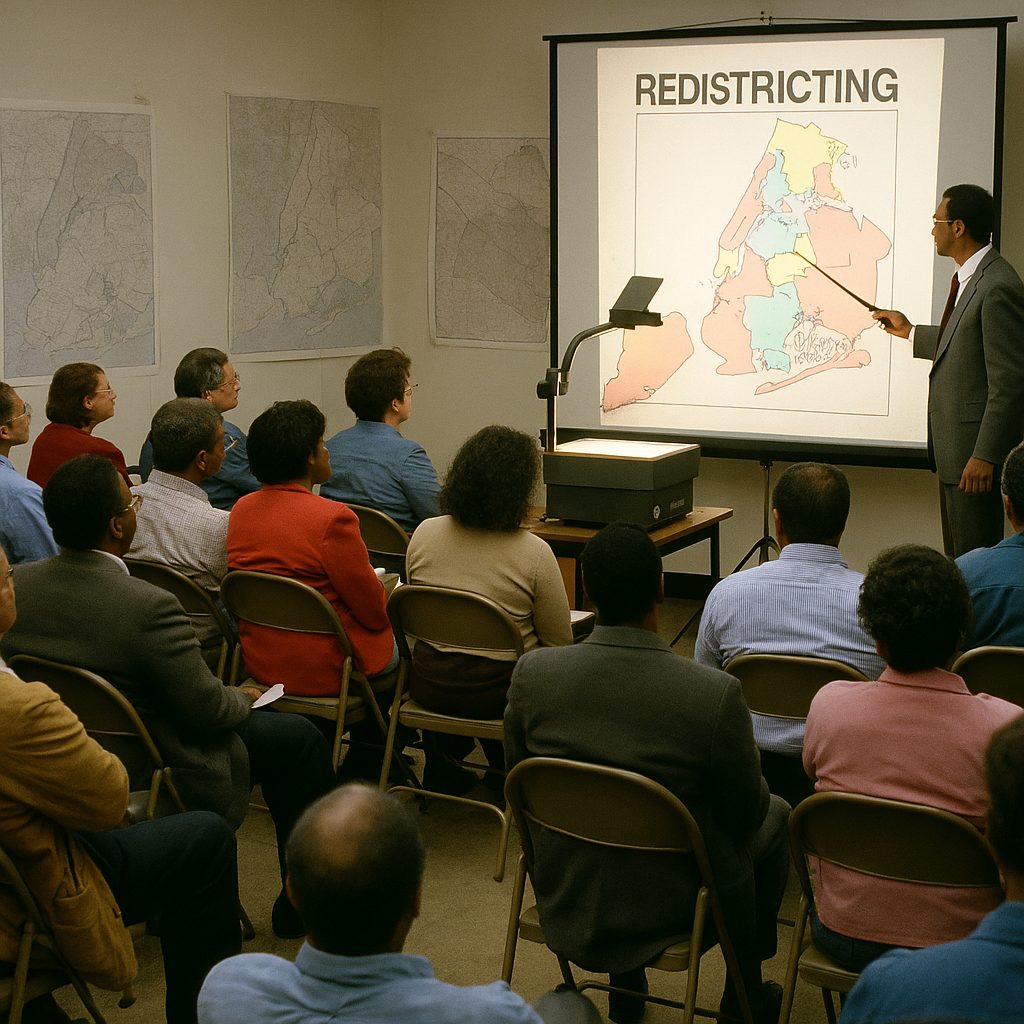
Earlier in his career, Carter played pivotal leadership roles in the Countdown 88 and 89 voter mobilization campaigns in New York, and helped win the adoption of a districting plan that expanded the New York City Council — securing fair and effective representation for African American (including Caribbean), Latino, and Asian American communities.
His movement roots include formative roles in the Black United Front, the Coalition to Save Sydenham Hospital, and the National Black Independent Political Party, where he helped bridge community activism with electoral strategy.
Today, he brings that legacy to bear in his leadership of BlackPolitics.org, blending historical advocacy, technical mastery, and strategic communications to build sustainable, mission-aligned infrastructure for African American voting rights and justice.
“We built power block by block — not just to win elections, but to shape the future. BlackPolitics.org
is about preserving that blueprint and making it usable for the next generation.” — Selwyn Carter
Focus Areas: Voting Rights, Redistricting Policy, Political Education, Labor Strategy, Civic Infrastructure, Black Politics

Steve Suitts
Historian, Civil Rights Strategist, and Southern Education Leader
Steve Suitts has spent his career documenting and defending civil rights across the American South. As Executive Director of the Southern Regional Council, he led groundbreaking research on voting rights, racial justice, and Southern political realignment. Under his leadership, the SRC became a national voice for civil liberties and electoral equity, producing widely cited reports and convening cross-regional coalitions.
He later served as Vice President of the Southern Education Foundation, directing research, advocacy, and philanthropic strategy to advance educational equity for low-income students and communities of color. He helped shape funding priorities for public education across the South, advised foundations on civil rights-aligned grantmaking, and authored influential reports on the racial demographics of public schools.
Suitts is the author of Hugo Black of Alabama and Overturning Brown, and continues to publish on civil liberties, historical recovery, and the intersection of policy and philanthropy. He teaches at Emory University and remains a leading voice in the fight for educational and electoral justice.
“The struggle for justice in the South has always been a struggle to tell the truth — and to act on it.” — Steve Suitts
Focus Areas: Civil Rights History, Education Equity, Voting Rights, Southern Politics, Philanthropic Strategy
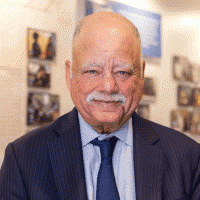
🧭 David R. Jones
Philanthropic Strategist, Civic Architect, and New York Movement Builder
David R. Jones has spent over four decades building infrastructure for justice — not just physical, but institutional, strategic, and civic. As President and CEO of the Community Service Society of New York (CSS) since 1986, Jones has led one of the city’s most respected organizations focused on economic equity, civic engagement, and systemic reform. Under his leadership, CSS advanced policy solutions in housing, healthcare, employment, and voting rights — always centering the lived experiences of low-income New Yorkers.
Jones began his public service career as Special Advisor to Mayor Edward Koch (1979–1983), shaping policy on race relations, urban development, immigration reform, and education. He later served as Executive Director of the New York City Youth Bureau (1983–1986), deepening his commitment to youth empowerment and civic infrastructure.
Beyond his institutional leadership, Jones is a public intellectual and media voice, writing bi-weekly columns for the New York Amsterdam News and El Diario/La Prensa. He has served on transition committees for Mayor Bill de Blasio and Mayor Michael Bloomberg, and was a member of the Moreland Commission on Public Integrity.
He currently serves on the MTA Board, contributing to committees on finance, capital programs, and audit — extending his influence into public transportation and infrastructure equity.
“We build not just for today, but for the generations who will inherit our choices.” — David R. Jones
Focus Areas: Philanthropy, Civic Infrastructure, Economic Equity, Voting Rights, Youth Empowerment, New York Policy
Reverend Diane Lacey
Faith Leader, Civic Organizer, and Health Equity Advocate
Reverend Diane Lacey is a veteran Harlem organizer whose leadership helped define the fight for community health and Black civic power in New York City. As Chair of the Coalition to Save Sydenham Hospital (1979–1980), she mobilized clergy, unions, social workers, and neighborhood activists to resist Mayor Koch’s austerity cuts and preserve Harlem’s only municipally run hospital. Her leadership was rooted in both moral authority and strategic coalition‑building, drawing on national allies such as Dorothy Height’s National Council of Negro Women and strategist Bill Lynch, who recruited her into the struggle and insisted she was “the right one” to lead.
Lacey’s activism extended beyond Sydenham. She later served on the New York City Health and Hospitals Corporation Board of Directors, where she helped shape policy for the nation’s largest municipal health system. Her tenure emphasized equity, patient access, and the preservation of community‑based care.
Today, Reverend Lacey serves as pastor of the Church of Gethsemane in Park Slope, Brooklyn, a Presbyterian congregation founded by and for formerly incarcerated men and women, their families, and neighborhood allies. Through its Prison Outreach Ministry and Project Connect program, she leads efforts to support incarcerated and formerly incarcerated individuals with housing, employment assistance, mental health care, and spiritual guidance. Project Connect, now more than 25 years old, links people inside prison to the church community and helps them transition successfully upon release.
Her ministry frames mass incarceration as both a moral and civic crisis, extending her lifelong commitment to coalition politics into the realm of criminal justice reform. Just as she once fought to keep Harlem’s hospital open, she now fights to keep doors open for those returning from prison.
“I stepped up because I knew the most — having led a major march across 125th Street to save Sydenham five years prior. That march convinced Mayor Beame not to close the hospital. In retrospect, why wouldn’t I believe resistance would work with new resources and people available?” — Reverend Diane Lacey
Focus Areas: Health Equity, Faith‑Based Organizing, Coalition Leadership, Public Hospitals Policy, Harlem Civic History, Criminal Justice Reform, Prison Ministry, Mass Incarceration
Source: First Church Brooklyn – The Church of Gethsemane Prison Outreach
🧑🏽🏫 Hulbert James
Political Strategist, Civic Architect, and Transnational Organizer
Hulbert James is a veteran political strategist whose work has shaped Black civic infrastructure across New York City, the United States, and the African diaspora. A graduate of Union Theological Seminary, James brought moral clarity and strategic precision to decades of public service — blending grassroots organizing, electoral strategy, international solidarity, and policy innovation.
In the early 1980s, James was a founding staff member of HumanSERVE, a pioneering initiative that integrated voter registration into public service agencies. His work helped lay the groundwork for the National Voter Registration Act of 1993 — known as the “Motor Voter” law — which expanded access to voter registration through DMVs and social service offices nationwide.
He held official roles in both the Jesse Jackson presidential campaigns and the David Dinkins mayoral campaign, where he helped mobilize Black, Latino, and progressive coalitions across New York City. His strategic leadership contributed to Dinkins’ historic victory as the city’s first Black mayor.
James also served in leadership roles with the National Welfare Rights Organization and the National Hunger Coalition, advancing anti-poverty policy and grassroots mobilization for economic justice. He co-founded the Center for Third World Organizing (CTWO), a groundbreaking training hub that equipped a generation of Black and Brown organizers with the skills to lead campaigns across labor, housing, and environmental justice movements.
As president of the Pan African Skills Project, James helped recruit African American activists to live and work in Tanzania, building transnational solidarity with African liberation movements. At a conference in Tanzania, he helped convene U.S. and African organizers — a catalytic moment that led to the founding of African Liberation Day as a mass political action in the U.S., supported by Black churches and grassroots institutions.
James also served as chair of the Haitian Support Project, which organized delegations of African Americans to visit Haiti in solidarity with Haitian democracy and development. This work was part of his broader leadership on the board of the Institute of the Black World 21st Century (IBW), where he helped advance Pan-African policy, reparations advocacy, and diaspora engagement.
He has been recognized by Congress for his lifetime contributions to New York City’s political and civic development, and continues to mentor new generations of movement leaders.
“We must never let the machinery of government become a substitute for the movement that built it.”
Focus Areas: Voter Access, Urban Strategy, Transnational Organizing, Faith-Based Mobilization, Anti-Poverty Policy, Diaspora Solidarity
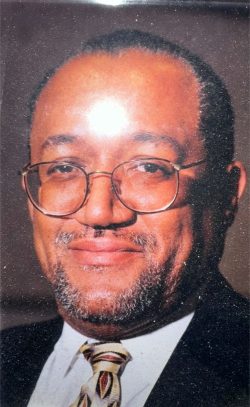
🧾 Ken Johnson
Political Analyst, Legislative Strategist, Southern Labor Leader
Ken Johnson is a veteran strategist whose career spans civil rights, labor organizing, and legislative research across the American South. With decades of experience in both grassroots and institutional leadership, Johnson has helped shape how Southern political movements engage with policy, worker advocacy, and coalition-building.
At the Southern Regional Council, Johnson served as Senior Analyst, Deputy Director, and Interim Director. His work focused on management, legislative issue tracking, and worker research, helping SRC respond to emerging policy threats and coordinate regional strategy. While he held managerial oversight of redistricting efforts, the day-to-day technical work was led by other staff. His leadership helped SRC navigate complex legislative landscapes and maintain its role as a trusted convener of Southern civic actors.
Johnson later served as Southern Regional Director for the AFL-CIO, where he held one of the most influential labor leadership roles in the region. He supervised all field staff across the South and directed state AFL-CIO bodies—elected leadership organizations—to implement the national federation’s programs and priorities. His work ensured strategic alignment between national labor goals and state-level execution, bridging institutional power with grassroots momentum. Under his leadership, Southern labor bodies advanced coordinated campaigns in political education, voter mobilization, and worker advocacy.
He also directed the Southern Labor Institute, a project of SRC focused on worker conditions, organizing climate, and labor policy across the region. His writing and analysis appeared in Southern Exposure and other movement publications, offering insight into the structural challenges facing Southern workers.
“Data is not just numbers—it’s a map of who gets heard, and who gets left behind.” — Ken Johnson
Focus Areas: Legislative Research, Worker Advocacy, Southern Political Trends, Labor and Civic Alignment, Movement Infrastructure, Electoral Strategy (macro-level), Voter Turnout Analysis (AFL-CIO and SLI), Redistricting (managerial oversight)
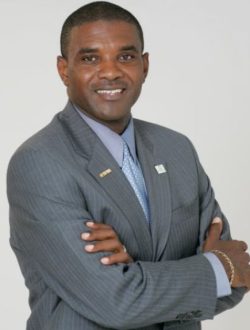
🧑🏽🏫 Senator Anthony C. “Tony” Hill, Sr.
Labor Leader, Civil Rights Legislator, and Political Strategist Jacksonville, Florida
Senator Tony Hill has spent over three decades shaping labor policy, civil rights legislation, and political strategy across Florida and the nation. A former longshoreman turned legislator, Hill’s career bridges grassroots organizing and high-level governance — always grounded in service, equity, and movement-building.
Hill began his political journey in 1992 when he was elected to the Florida House of Representatives, serving three consecutive terms. He later served in the Florida Senate, where he became the Senate Democratic Floor Leader and chaired the Florida Minimum Wage Ballot Initiative, securing automatic wage increases for working-class Floridians. He was the first African American to represent Volusia County in the State Senate.
A lifelong labor advocate, Hill served as Secretary-Treasurer of the Florida AFL-CIO, later honored as Secretary-Treasurer Emeritus and inducted into the Florida Labor Hall of Fame. He is the youngest and first African American recipient of the A. Philip Randolph Award, the AFL-CIO’s highest honor.
Hill played a pivotal role in the 2008 Obama campaign, serving as Co-Chair of the Florida Change Committee and a member of the Florida Advisory Council. He was later elected to the Democratic National Committee and appointed to the Florida Democratic Executive Committee, helping shift the political landscape of the state.
He sponsored the legislation that created the Florida State Capitol Civil Rights Hall of Fame, making Florida the first state to enshrine civil rights leaders in its Capitol. His legislative work also includes historic resolutions apologizing for slavery and advocacy for class size reduction in public schools.
Beyond elected office, Hill has served as Federal Policy Director for Mayor Alvin Brown, Field Representative for Congressman Al Lawson, Jr., and Chair of the NAACP Florida State Conference Labor Roundtable. He is the founder of the Achieve, Instill & Inspire Foundation, which provides scholarships to young men of color pursuing careers in education.
Hill holds honorary doctorates from Edward Waters College and Bethune-Cookman University, and is a proud graduate of the National Labor College. He is a Montford Point Marine Association Hall of Fame inductee, a Life Member of Omega Psi Phi Fraternity, and a dedicated member of Greater Macedonia Baptist Church, where he teaches Sunday School and leads the Men’s Usher Board.
As a founding Advisory Council member of BlackPolitics.org, Senator Hill brings unmatched legislative experience, labor wisdom, and a legacy of faith-driven service.
“Stand with me because it’s going to get rough. There might be conversations we may not like, but we’ve got to keep pressing.”
Focus Areas: Labor Policy, Civil Rights Legislation, Electoral Strategy, Education Equity, Faith-Based Leadership
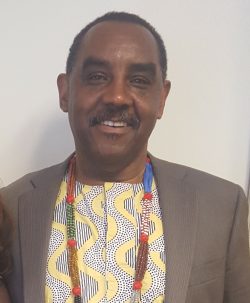
Tony “Menelik” Van Der Meer, Ph.D.
Scholar Activist, Educator, and Movement Strategist
Tony “Menelik” Van Der Meer is a professor in the Africana Studies Department at the University of Massachusetts Boston and a lifelong scholar activist. His work centers on leadership development and transformative change within the context of African diasporic cultural, political, and spiritual traditions.
Van Der Meer leads experiential learning journeys to Havana, Santiago, and Guantánamo, Cuba, in solidarity with the Cuban people, and domestic guided visits to Birmingham, Montgomery, and Selma, Alabama, where students and community leaders engage directly with the legacy of the civil rights movement.
He serves as Chair of Communiversity South, a nonprofit based in Rocky Mount, North Carolina, dedicated to the education and leadership development of Black workers. The organization also stewards the digital archiving of Black Workers for Justice (BWFJ) — preserving decades of grassroots labor organizing and political activism.
Van Der Meer is co-editor of State of the Race: Creating Our 21st Century — Where Do We Go From Here?, a foundational text exploring Black political thought and strategy in the post-civil rights era. His work bridges academic inquiry with frontline organizing, and he continues to mentor emerging leaders across movements and generations.
“We must teach our students and communities not just what happened, but why it matters — and how to carry it forward.” — Tony Van Der Meer
Focus Areas: Africana Studies, Political Education, Labor History, Experiential Learning, Archival Recovery, Diasporic Leadership
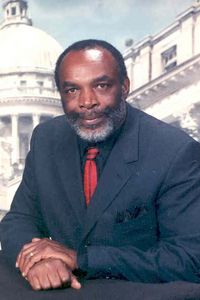
Representative Jim Evans
Civil Rights Leader, Former State Representative, Radio Host, Immigrant Rights Advocate, and Labor Organizer
As a Labor organizer, Jim Evans led the Justice for Avondale Cmpaign and had a leadership role in winning the Right to Work Campaign in Missouri. Jim Evans is a lifelong champion of labor, civil rights, and political empowerment in Mississippi, across the South, and nationally. A former NFL player with the New York Giants.He served in the Mississippi House of Representatives from 1991 to 2016, where he championed voting rights, workers’ protections, and criminal justice reform.and held leadership roles in the Southern Christian Leadership Conference (SCLC), where he helped advance grassroots organizing and voter education across the South. He is the founder and president of the Mississippi Immigrants Rights Alliance (MIRA), a coalition that has successfully blocked anti-immigrant legislation and built bridges between Black and immigrant communities. Evans was also a key figure in Jesse Jackson’s presidential campaigns, helping mobilize Southern Black voters.
His work continues through mentorship, movement-building, and strategic advising — ensuring that the next generation inherits both the lessons and the tools of struggle. Evans also hosts the longest-running radio talk show in Mississippi, where he mentors emerging leaders, amplifies community issues, and mobilizes listeners around civic engagement. His work has helped elect progressive candidates, expand voter access, and build durable coalitions across race and class.
“We can help show the country a better way — a path to higher ground.” — Jim Evans
Focus Areas: Labor Organizing, Voting Rights, Southern Movement History, Legislative Strategy, Intergenerational Mentorship
Tony Harrison
Voting Rights Strategist, Former Legislator, and Civic Architect
Tony Harrison has spent his life advancing Black political power through legislative leadership, redistricting, voting rights advocacy, and strategic organizing. A former member of the Alabama House of Representatives, Harrison brought a deep commitment to racial justice and civic empowerment to every role he held — from state government to Capitol Hill.
He served as a senior advisor to both Congressman Jim Clyburn and Congressman Bennie Thompson, helping shape national policy on voting rights, civil liberties, and community development. His work bridged grassroots mobilization with federal strategy, and he remains a trusted voice in the fight for electoral equity.
Harrison has also worked with the United Mine Workers of America, supporting political education and field operations across the South. His experience helped connect working-class communities to broader civic campaigns and voting rights efforts.
As Director of the Electoral Participation Project, Harrison led national initiatives to expand voter access, protect ballot integrity, and train organizers — with a strategic focus on redistricting. His work helped create majority-Black and influence districts across the nation, shaping the infrastructure behind major voting rights and redistricting efforts nationally.
He is a former Board Member and past President of the Southern Regional Council (SRC), one of the South’s most storied civil rights organizations. Under his leadership, the SRC deepened its commitment to racial justice, voting rights, and historical recovery — producing research, convening coalitions, and mentoring new generations of movement leaders.
As a founding Black Politics Advisory Council member of BlackPolitics.org, Harrison brings unmatched historical perspective, strategic clarity, and a lifelong commitment to building durable civic infrastructure.
“We don’t just fight for access — we fight for permanence. For structures that outlast the moment.”
Focus Areas: Voting Rights, Legislative Strategy, Electoral Campaigns, Southern Politics, Movement Mentorship