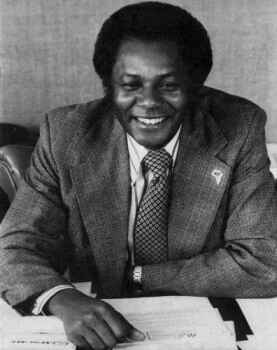
Bill Lucy
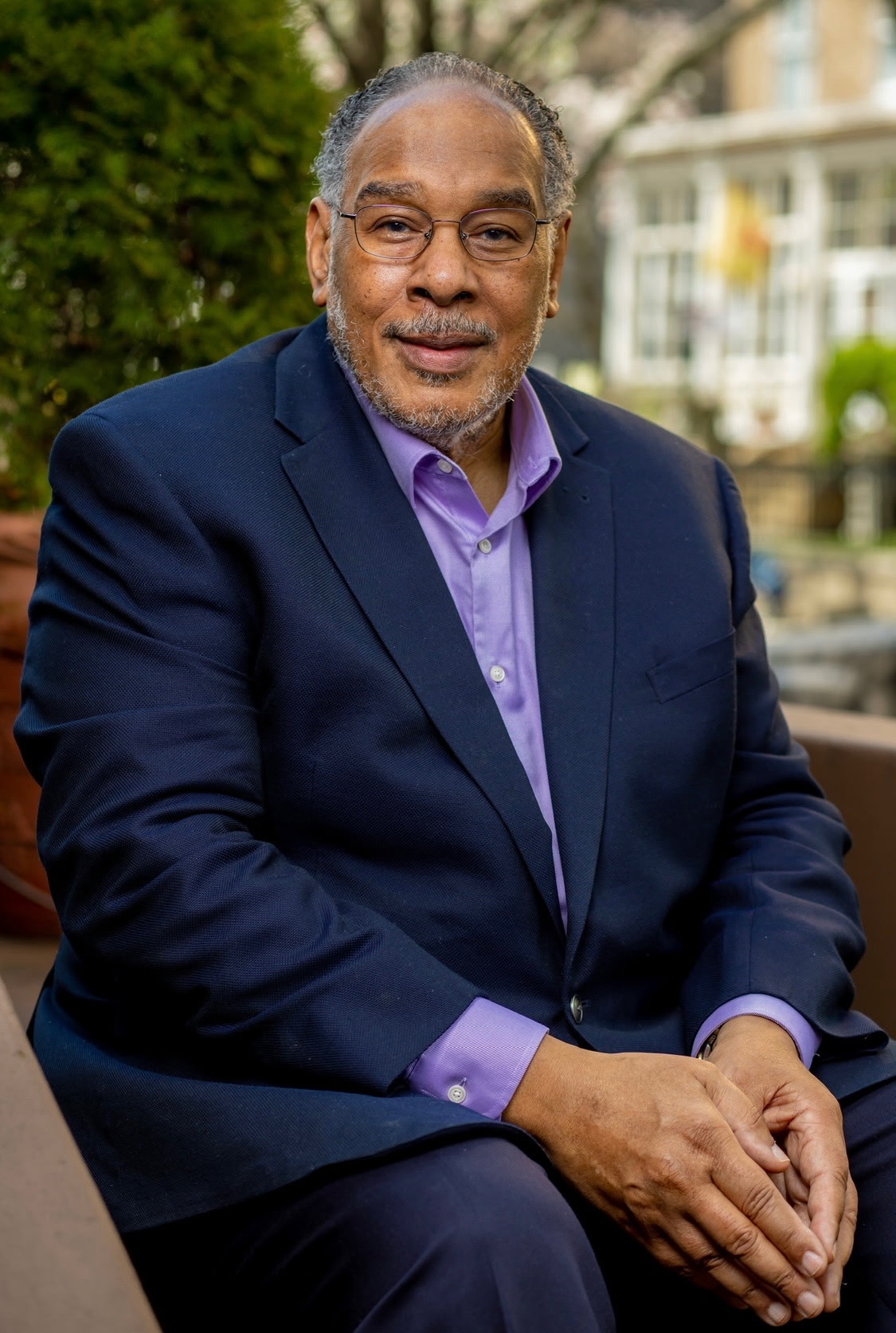
In 1972, Bill Lucy co‑founded the Coalition of Black Trade Unionists (CBTU), establishing the most influential center of Black labor leadership and Black trade union history, and anchoring a new era of labor‑civil rights coalition building. to address the exclusion of Black workers from union leadership and political decision-making. Lucy’s legacy is woven into the fabric of Black labor history, civil rights strategy, and political infrastructure. As a founding force behind the Coalition of Black Trade Unionists (CBTU), Lucy helped transform union halls into engines of Black political power—linking economic justice to voting rights, international solidarity, and movement-building.
Born in Memphis in 1933, Lucy trained as an engineer and entered the labor movement through AFSCME, where he quickly emerged as a skilled organizer and strategist. He rose through the ranks to become AFSCME’s International Secretary‑Treasurer and one of the most influential Black labor leaders in U.S. and global history.
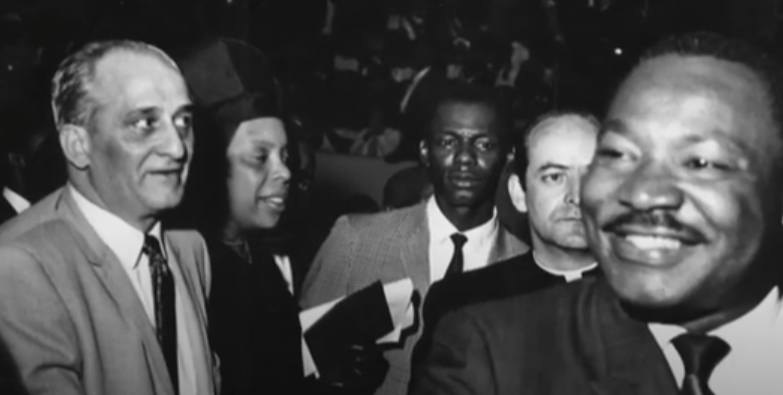
Lucy’s leadership came into national focus during the 1968 Memphis sanitation strike, where he stood alongside Dr. Martin Luther King Jr. and local workers demanding dignity, fair wages, and union recognition. The strike’s rallying cry—“I Am a Man”—became a defining moment in the civil rights movement, and Lucy helped ensure that labor demands were treated as civil rights imperatives.
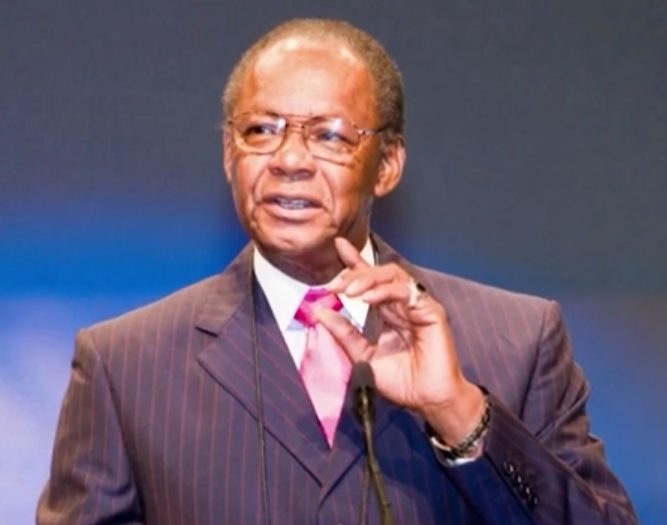
🏛️ Bill Lucy: Architect of Labor Power and Political Strategy
After its founding in 1972, CBTU became a strategic hub—mobilizing Black unionists, endorsing candidates, and shaping policy. Under Lucy’s guidance, the coalition didn’t just advocate for workers—it built infrastructure for Black political power.
Bill played a critical role in the development of African American labor and political activists, and under his leadership, the organization developed an independent national identity, not just a labor organization, but as a powerhouse of black political organizing.
Bill Lucy’s Role in Jesse Jackson’s 1984 Presidential Campaign
Bill Lucy’s partnership with Jesse Jackson during the 1984 presidential campaign stands as one of the most consequential alliances between Black labor leadership and national electoral politics in modern American history. Long before Jackson’s candidacy was taken seriously by the political establishment, Lucy recognized that Jackson’s message — economic justice, anti‑apartheid activism, and multiracial democracy — spoke directly to the lived experience of working‑class Black union members. As a co‑founder of the Coalition of Black Trade Unionists (CBTU) and one of the most respected figures inside the AFL‑CIO, Lucy was uniquely positioned to translate that alignment into real political power.
Lucy helped Jackson penetrate a labor movement that had historically been cautious — and often resistant — to outsider candidacies, especially those led by African Americans. His credibility inside the AFL‑CIO gave Jackson legitimacy at a moment when many union leaders were unsure how to respond to the campaign’s insurgent energy. Lucy brokered introductions, eased internal tensions, and made the case that Jackson’s run was not symbolic but grounded in the economic demands of working people. Through CBTU chapters, he mobilized stewards, local officers, and rank‑and‑file members who saw their own struggles reflected in Jackson’s platform.
Inside the AFL‑CIO, Lucy’s advocacy helped shift perceptions of Jackson from a protest candidate to a serious contender whose campaign was rooted in labor’s core concerns. He connected Jackson to plant‑closing fights, wage battles, and anti‑apartheid organizing — issues that resonated deeply across industries. Jackson, in turn, treated union members not as an interest group but as partners in a shared fight for economic and racial justice. That mutual respect was rare in national politics, and it left a lasting impression on labor leaders and workers alike.
For Jackson, Lucy was indispensable. He provided strategic counsel, organizational muscle, and a bridge into a labor movement that had not always embraced Black political leadership. And for labor, Jackson became a figure of deep respect — someone who spoke their language, understood their struggles, and elevated their concerns on a national stage. Many within the AFL‑CIO came to view Jackson not simply as a candidate but as a moral and political ally whose presence strengthened the movement.
Their collaboration helped redefine what a multiracial, working‑class coalition could look like inside Democratic Party politics. The infrastructure Lucy helped build in 1984 — and again in 1988 — expanded the electorate, broadened the party’s internal leadership pipeline, and demonstrated the political power of Black union members. It also laid the groundwork for future breakthroughs inside the Democratic Party, from Ron Brown’s election as DNC Chair to the rise of strategists like Donna Brazile and Minyon Moore.
In the long arc of Lucy’s career, his work with Jackson stands as a defining example of how labor leadership, civil rights activism, and electoral politics can converge to reshape national institutions. It was a partnership rooted in shared values, strategic clarity, and a belief that working people — especially Black working people — deserved a central place in American democracy.
Lucy’s work with Jackson revealed the depth of his strategic vision — a vision that shaped not only labor politics but the broader struggle for economic and racial justice.
As a leader, Bill was always accessible to young staff and activists, and he would regularly communicate with us. He also opened doors for many.
Selwyn Carter, former AFL-CIO national staff
Under the leadership of Bill Lucy nationally, and Jim Bell in New York City, CBTU was involved in every major community struggle in New York, especially around access to quality health care.
Before my history in labor, I was permanently influenced by the work of CBTU in the NYC black community, by its use of union resources like printing, meeting space, etc. to assist community based organizations that were outside of the union orbit, by its advocacy on issues that directly affected the black community in NYC – including, health care, housing, police violence and brutality, opposition to South African Apartheid, ethnic studies and budget cuts in the City University system – and by its willingness to enter community coalitions and participate in meetings alongside community activists organizations.
That stature was reflected not only in his work with Jackson but in the national and global institutions he helped lead.
⭐ Additional Leadership and Legacy
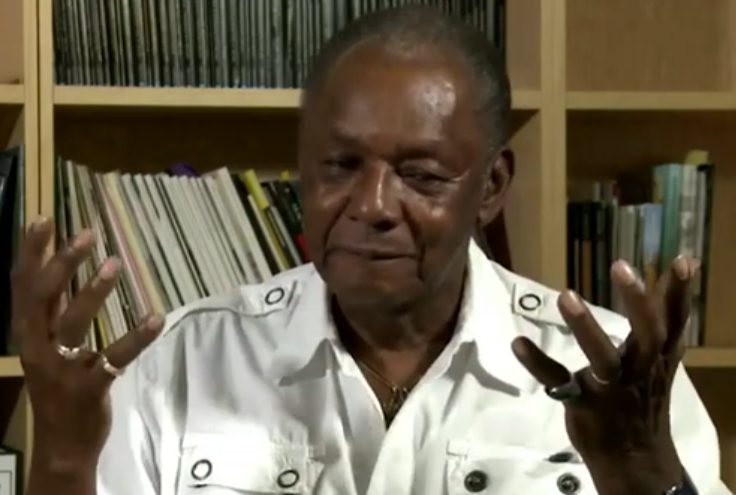
Bill Lucy’s influence extended far beyond AFSCME and CBTU. Over the course of his career, he became one of the most consequential labor leaders of the twentieth century, shaping national and global institutions in ways that few Americans — and even fewer African Americans — had ever done.
Lucy served for decades on the AFL‑CIO Executive Council, shaping union governance reform, strengthening public employee unions, and helping define the direction of the modern labor movement history. The Executive Council is the federation’s governing body and one of the most powerful institutions in American labor. At a time when the Council had been overwhelmingly white for most of its history, Lucy’s presence marked a profound shift in who could exercise authority at the highest levels of organized labor. His tenure there reflected both his strategic brilliance and the respect he commanded across unions, industries, and political factions.
His leadership also extended to the global stage, where Lucy became a central figure in global labor solidarity, international trade union movement strategy, and the expansion of international worker rights across continents. Lucy became the first African American elected President of Public Services International (PSI), the world’s largest federation of public‑sector unions. He also served as a Vice President of the International Confederation of Free Trade Unions (ICFTU), one of the world’s most influential labor federations, further extending his leadership onto the global stage. In that role, he helped shape international labor standards, supported democratic movements abroad, and strengthened ties between U.S. unions and workers’ organizations across Africa, Latin America, and Europe. His global work reinforced the principle that labor rights and human rights are inseparable.
Lucy’s influence reached deep into the civil rights movement as well. He served for many years on the NAACP National Board of Directors, where he helped guide the organization’s strategy on voting rights, economic justice, and international solidarity. His dual presence in labor and civil rights leadership made him one of the rare figures who could bridge movements that were often treated as separate but were, in practice, deeply intertwined.
Within AFSCME, Lucy’s impact was transformative. During his tenure as Secretary‑Treasurer, the union grew from roughly 200,000 members to more than 1.4 million, becoming one of the most powerful forces in American labor. That growth was not merely numerical; it reflected Lucy’s commitment to organizing, racial inclusion, and the belief that public‑sector workers — especially Black workers — deserved a central place in the nation’s economic and political life.
Taken together, these roles reveal the full scope of Lucy’s legacy. He was not only a strategist or a negotiator, but a builder of institutions — local, national, and global — that expanded the power of working people and deepened the connection between labor and the long Black freedom struggle. His career stands as a testament to what disciplined, principled, movement‑rooted leadership can achieve.
Bill Lucy Africa and Global Impact
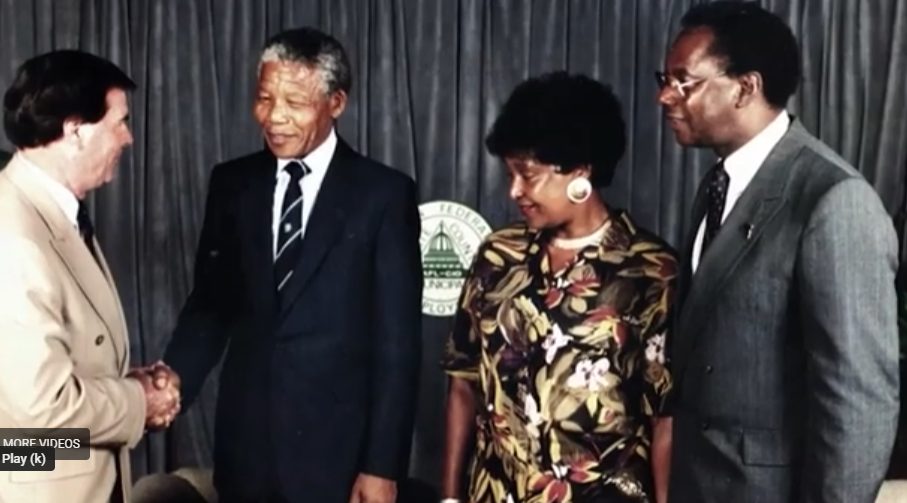
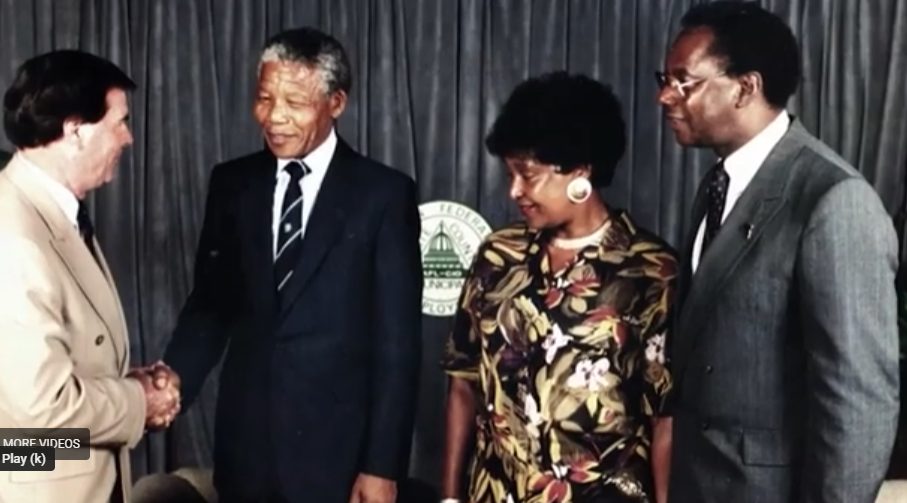
Bill Lucy’s influence extended far beyond domestic labor. He was a key figure in the Free South Africa Movement, helping organize U.S. labor support for the anti-apartheid struggle. He stood with Nelson Mandela, pressured corporations to divest, and helped link Black labor to global liberation.
| Institution | Role | Years / Notes |
|---|---|---|
| AFSCME | Secretary‑Treasurer | 1972–2010; grew union from 200,000 to 1.4 million members |
| AFL‑CIO Executive Council | Council Member | One of the earliest African Americans to serve; decades of tenure |
| Coalition of Black Trade Unionists (CBTU) | Co‑Founder | Founded 1972; national and international influence |
| Public Services International (PSI) | President | First African American to lead the world’s largest public‑sector federation |
| International Confederation of Free Trade Unions (ICFTU) | Vice President | Global labor leadership; pre‑ITUC merger |
| NAACP | National Board of Directors | Long‑serving member; Board Member Emeritus |
In 1974, the U.S. government was openly supporting Portuguese colonial rule of Angola, Cape Verde, Guinea Bissau, and Mozambique,) white minority rule in Rhodesia, South Africa’s occupation of Namibia, and the apartheid regime in South Africa. Yet, in 1974 CBTU resolutions called for a fundamental change in U.S. policy toward southern Africa and an economic boycott of South Africa, because Bill Lucy appreciated the connection between U.S. foreign policy and the everyday lives of workers. He agreed with Cape Verdean leader Amilcal Cabral, who wrote in 1965: “Always bear in mind that the people are not fighting for ideas, for the things in anyone’s head. They are fighting to win material benefits, to live better and in peace, to see their lives go forward, to guarantee the future of their children…”
remarks at AFSCME’s celebration of life for bill lucy, held in d.c., by Cecelie Counts, a former transafrica, naacp, and aflcio staff member who met bill lucy almost 50 years ago at a southern africa support project.
Bill Lucy helped grassroots solidarity organizations (e.g. the D.C based Southern Africa Support Project (SASP) produce public education materials with the “union label”. He helped local organizers introduce southern Africa leaders to national civil rights organizations, local, state, county, and federal elected officials. Bill’s nationwide stature and CBTU’s co-sponsorship of events heightened the credibility of local organizations and the visibility of each of southern Africa’s liberation struggles.
In 1977, Bill was a founding board member of TransAfrica, the African American foreign policy lobby. He understood the negative impact U.S. foreign policy had on Africa, the Caribbean, and Black people throughout the world, & brought TransAfrica together with civil rights organizations together to oppose discriminatory immigration and refugee policies.
Bill helped lead the Free South Africa Movement (FSAM), which used civil disobedience and daily demonstrations to take “lobbying” to an entirely new level. His historic relationships with elected officials, national organizations, and South African labor leaders amplified the decades long campaign for sanctions against apartheid. It was Bill Lucy who brought United Mine Workers (UMW) President Richard Trumka and TransAfrica President Randall Robinson together, leading to an international campaign to Boycott Royal Dutch Shell. When Nelson Mandela was finally released from prison in 1990—Bill played a strategic role in Mandela’s historic nationwide U. S. tour. Fittingly, Bill Lucy led the labor delegation that helped monitor the 1994 election that elected Nelson Mandela President of South Africa.
U.S. foreign policy continues to wreak havoc on people throughout the world. We must remember Bill Lucy’s courage and wisdom, and (to again quote Cabral) “Tell no lies, claim no easy victories”.
He also played a pivotal role in the National Voter Registration Act (NVRA) campaign of the early 1990s. Lucy and CBTU helped model reform on Minnesota’s Human SERVE innovations—ensuring that voter registration was accessible through public agencies. His strategic vision helped turn grassroots organizing into federal policy.
Lucy mentored generations of leaders, including Jesse Jackson, and remained a trusted advisor across labor, civil rights, and political circles. His work was hands-on, future-focused, and rooted in the belief that Black workers were not just participants—but architects—of American democracy.
Today, his legacy lives on in every union hall, voter drive, and international solidarity campaign that centers Black voices. Bill Lucy didn’t just organize workers—he built power, shaped policy, and helped define the infrastructure of the Black political movement.
Bill Lucy Timeline
✊🏾 From Memphis to Mandela: A Timeline of Strategic Power
| Year | Milestone | Key Figures |
|---|---|---|
| 1968 | Memphis Sanitation Strike | Bill Lucy, AFSCME, MLK |
| 1972 | Gary National Black Political Convention | Lucy, Jackson, Baraka |
| 1973 | Founding of CBTU | Bill Lucy, Cleave Robinson |
| 1984 | Jackson’s First Presidential Campaign | Lucy, Jackson |
| 1988 | Jackson’s Second Presidential Campaign | Lucy, Jackson, Dinkins |
| 1989 | Dinkins Mayoral Victory | Lucy, Dinkins, Lynch |
| 1990 | Mandela’s NYC Visit | Lucy, Mandela, Jackson |
| 1993 | NVRA Reform | Lucy, Congressional allies |
🗣️ Bill Lucy Speaks: Voices of Labor and Liberation
“We didn’t just fight for labor—we fought for liberation.” — Bill Lucy
“CBTU was born from struggle. It still breathes justice.” — Bill Lucy
“From Memphis to Mandela, we carried the banner of dignity.” — Bill Lucy
🎞️ Carousel Graphics
- Lucy with MLK during Memphis strike
- Lucy founding CBTU with Cleave Robinson
- Lucy with Jesse Jackson at Rainbow Coalition events
- Lucy with Nelson Mandela during NYC visit
- Lucy at AFSCME conventions and NVRA hearings
📊 Labor Power and Economic Justice
The labor movement has long served as a backbone for Black economic advancement. In the post-civil rights era, a new generation of union leaders emerged who understood that workplace equity was inseparable from racial justice. Among them was a strategist whose influence extended far beyond contract negotiations.
Under his leadership, Black workers gained a stronger foothold in national labor federations, and the infrastructure for collective bargaining was expanded to include civil rights demands. He helped shape a framework where economic justice meant not only fair wages, but also access to housing, education, and political representation.
The organization he helped build became a hub for Black labor activism, connecting rank-and-file workers to national policy debates. It hosted annual conventions that doubled as strategy sessions, cultural celebrations, and training grounds for future leaders. These gatherings reinforced the idea that labor power was community power.
Through decades of advocacy, this network supported strikes, negotiated diversity benchmarks with major employers, and pushed for federal protections against workplace discrimination. It also played a key role in voter mobilization efforts, recognizing that economic policy was shaped at the ballot box.
What distinguished this movement was its ability to bridge generations. Veterans of the civil rights era mentored younger organizers, while retirees remained active in shaping policy and mentoring youth. The result was a living archive of Black labor history—one that continues to inform today’s fights for equity and inclusion.
The coalition’s early campaigns included efforts to desegregate skilled trades, expand apprenticeship programs, and challenge exclusionary hiring practices in manufacturing and public sector jobs. Convention banners from the 1970s and 1980s often featured slogans like “Jobs, Justice, and Peace” and “Labor United for Civil Rights,” reflecting the dual mission of economic and racial equity.
One of the most powerful moments in its history came during a national convention in the early 1990s, when a veteran labor leader declared: “We are not just workers—we are builders of democracy.” That quote became a rallying cry for future campaigns, appearing on posters, pamphlets, and even union jackets.
Another archival quote from a regional meeting in the South emphasized the grassroots nature of the movement: “Our strength is in our locals. When we organize at home, we change the nation.” This sentiment guided The coalition’s strategy for decades, reinforcing the importance of bottom-up leadership.
Visuals from early campaigns often showed multiracial picket lines, church-based organizing sessions, and youth training workshops. These images captured the spirit of solidarity and the fusion of labor, faith, and civil rights traditions.
The network’s legacy continues today in the form of mentorship programs, policy advocacy, and cultural preservation. Its archives serve not only as a record of struggle, but as a blueprint for future generations seeking justice through organized labor.
📊 Infographics Block
- Labor Power = People Power: AFSCME + CBTU + Civil Rights
- CBTU Founders Map: Regional leaders and organizing hubs
- Mandela Solidarity Flowchart: From U.S. labor to global liberation
- NVRA Reform Pathway: Lucy’s role in shaping national registration law
🧰 Legacy Toolkit Integration
- Downloadable Timeline: Memphis to Mandela
- CBTU Founders Gallery: Expandable carousel with bios and quotes
- ZIP Widget Messaging Block: Connect users to voting rights scorecards
- TablePress-Ready Scorecards: Regional access grades and advocacy partners
📚 References & Further Reading
CBTU & Labor LegacyCBTU Tribute to Bill Lucy
AFL-CIO Honors Bill Lucy
BlackPast: Bill Lucy Biography
September 30th, 2025
About The Author