When the Law Wouldn’t Protect : Armed Self-Defense in the Black Freedom Struggle
Armed self-defense has long been part of the Black freedom struggle — not as a rejection of democracy, but as a response to its failure to protect Black lives. In Monroe, North Carolina, Robert F. Williams organized armed resistance when police refused to stop Klan attacks. In Bogalusa, Louisiana, the Deacons for Defense and Justice protected civil rights workers and forced federal intervention. In Lowndes County, Alabama, Black organizers combined self-defense with voter registration, laying the groundwork for independent Black political power.

These efforts didn’t replace the vote — they defended the right to pursue it. They made space for organizing, for education, for protest. And they exposed the violence that democracy too often ignored.
Black armed self-defense was never monolithic. It ranged from community patrols and home protection to organized formations that trained and mobilized in response to direct threats. Some movements aligned with nonviolent campaigns, while others rejected integrationist frameworks altogether. But all shared a common goal: survival, dignity, and the right to build power without fear.
Timeline: Milestones in Black Armed Self-Defense (1866–1979)
| Year | Event | Impact |
|---|---|---|
| 1866–1877 | Reconstruction militias and community defense | Black communities form armed groups to protect newly won rights amid white backlash |
| 1957 | Robert F. Williams defends armed resistance in Monroe, NC | Sparks national debate; challenges NAACP’s stance on nonviolence |
| 1964 | Deacons for Defense and Justice formed in Louisiana | Protect civil rights workers; force federal intervention in Bogalusa and Jonesboro |
| 1964–1966 | Armed protection quietly supports SNCC in Mississippi | Locals guard homes and churches; self-defense coexists with voter organizing |
| 1965 | Lowndes County Freedom Organization founded in Alabama | Combines armed self-defense with independent Black electoral organizing |
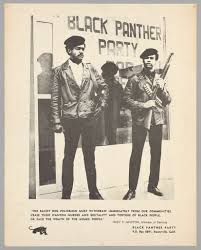
| 1966 | Black Panther Party for Self-Defense founded in Oakland, CA | Fuses armed patrols with community care; spreads nationally and reframes self-defense as civic engagement |
| 1969 | Fred Hampton assassinated in Chicago | Exposes state repression; Chicago becomes model for urban self-defense |
| 1970s | Surveillance and repression intensify | Many groups disband or go underground; legacy shapes future safety organizing |