Economic Justice & Reparations Hub
The Economic Justice & Reparations Hub examines the history and policies shaping racial wealth inequality in America. From the call for reparations to modern policy debates on equity, this hub highlights both historical context and present-day challenges.
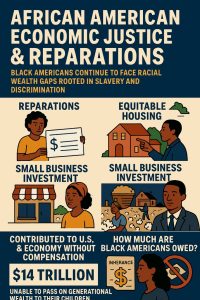
The fight for economic justice has always been central to the Black freedom struggle. This hub explores issues of wealth inequality, labor rights, housing, health equity, and reparations for slavery and systemic discrimination. It serves as both a historical archive and a forward-looking resource for current debates and policy proposals.
The hub examines the ongoing struggle for economic justice and reparations for African Americans and the African diaspora. From the historical denial of wages during slavery to present-day disparities in wealth and opportunity, the movement for reparations has become one of the most critical policy debates of the 21st century. It includes content from a variety of sources, including African American activists and organizations who championed the fight for reparations long before the concept became popular.
Here, in the Archives, you will learn about Queen Mother Moore, an African American freedom fighter whose tenure connects the Garvey Movement of the 1920s to the civil rights and Black Power Movements of the 1960s. Queen Mother and here sister, Eloise, were instrumental in the education of Malcolm X and the evolution of his thinking. It was Queen Mother Moore more than any other African American leader who championed the fight for reparations for African Americans and is primarily responsible for the concept taking root among the current generation of African American leaders, activists, and community.
Here you’ll find resources, articles, and historical documents that examine how systemic racism shaped wealth inequality, how grassroots activists and policymakers are fighting for redress, and how reparations are framed within the global movement for justice. Explore The Case for Reparations: Economic Justice in the 21st Century
Updated 2025