Black Politics
Table of Contents
ToggleAbout
Recovering Legacy. Building Power.
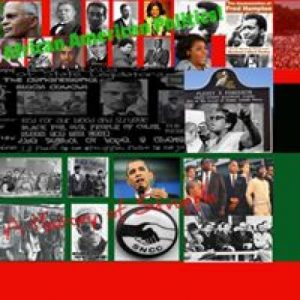
Black Politics is a digital platform dedicated to preserving, contextualizing, and activating the political legacy of Black communities across the United States. We document campaigns, coalitions, and civic movements — not just to archive the past, but to build tools for future action.
Founded during Black History Month 2014, the site began as a curated hub for historical and contemporary records of African-American politics. Today, it has evolved into a strategic archive that blends editorial analysis, digitized materials, and advocacy tools — designed for organizers, educators, journalists, and everyday readers.
Our Editorial Philosophy: Documentation, Not Prescription
BlackPolitics.org is a historical archive and educational platform. We document the full range of Black political organizing—from electoral campaigns to revolutionary movements—because honest history requires completeness.
What we document:
- Electoral infrastructure and campaigns
- Civil rights organizing and nonviolent direct action
- Armed self-defense and community protection
- Revolutionary Black nationalism and international solidarity
- Cultural organizing and institutional stewardship
What we DON’T do:
- Advocate for any single current as universally applicable
- Prescribe contemporary strategy based on historical tactics
- Endorse violence or illegal activity
- Claim equivalence between all currents
Our principle: Communities facing different historical conditions developed different strategies. All five currents emerged as rational responses to specific forms of repression, opportunity, or betrayal. Understanding this complexity makes us smarter about how power works and how communities build it.
For researchers, organizers, and readers: We provide context, not conclusions. We trust you to draw lessons appropriate to your time, place, and conditions.
Why We Cover the Full Spectrum
Black political history is often told in fragments:
- Electoral histories ignore revolutionary movements
- Radical archives exclude mainstream politics
- Civil rights narratives erase armed self-defense
- Academic sites lack contemporary connections
We refuse this fragmentation because:
- The currents shaped each other. You cannot understand the Congressional Black Caucus without understanding the Black Panthers. You cannot understand integration without understanding separatism. The currents emerged in dialogue, tension, and response.
- Movements were fluid. Leaders moved between currents. Organizations contained multiple tendencies. Electoral politicians had revolutionary pasts. Neat categories falsify messy reality.
- Today’s organizers need complete toolkit. Contemporary activists face different conditions than 1960s or 1990s organizers. They need access to ALL historical strategies—from voter registration to armed defense to international solidarity—to make informed choices.
- Intellectual honesty demands it. Sanitizing history to make it palatable serves no one. We present the full record because readers deserve truth.
🎯 What You’ll Find Here
- Historical archives & timelines – curated documents, speeches, news clippings, and primary sources that trace movements from Reconstruction to the present
- Explainers & pillar essays – accessible, well-sourced overviews of key people, places, and turning points
- Scorecards & accountability tools – tables that track executive actions, legislation, and municipal impacts relevant to Black communities
- Hubs & topic pages – quick entry points into themes like voting rights, independent Black politics, civil rights, and local governance
- Toolkits & schema-optimized archives – resources for educators, organizers, and researchers to activate history in real time
Our content includes both original writing and carefully attributed excerpts for research and commentary. Views expressed in contributed pieces do not necessarily reflect the opinions of .
To organize this history with clarity and purpose, uses a five-part framework — each current representing a distinct strategy, institution, or worldview that has shaped Black political life across generations.
🧭 The Limits of Electoral Power: Why Disillusionment Persists
Since Reconstruction, African Americans have rarely exercised majority control in any legislative body capable of independently enacting transformative policy for Black communities. During the 1870s, Black legislators briefly held majorities in Southern states like South Carolina, passing laws that expanded public education and civil rights. But this power was violently dismantled by Redemption governments and never restored.
In the century that followed, landmark victories — from the Civil Rights Act to the Voting Rights Act — were achieved through coalition politics, not Black-majority governance. Even the Congressional Black Caucus, founded in 1971, has never held decisive legislative power. Local exceptions exist: cities like Atlanta, Detroit, and Baltimore have elected Black mayors and council majorities, but state preemption, federal constraints, and economic pressures have often limited their autonomy.
This absence of sustained, autonomous legislative power has fueled deep disillusionment. Many Black activists, leaders, and voters — especially those shaped by grassroots struggle — have never seen electoral politics deliver on its promises. As recent studies confirm, disillusionment now rivals voter suppression as a driver of low turnout among poor and working-class Black Americans.
Yet Electoral Politics remains the gravitational center of — not because it has fulfilled its promise, but because it has shaped every other current in response. It was the rise of Black electoral power during Reconstruction that provoked systemic backlash. It was the denial of that power that gave rise to separatist institutions, armed self-defense, and global solidarity. And it is the ongoing struggle for representation — from local school boards to Congress — that continues to define the terrain of Black political life. Electoral Politics is not the endpoint. It is the fault line.
🧭 The Five Currents of Black Political Strategy
A Historical Framework for Editorial Organization
Electoral Politics is the gravitational center of our site — the current through which all others orbit, react, or evolve. Its rise during Reconstruction marked the first large-scale emergence of Black electoral political power and multiracial democracy in the South. But it was precisely this Black political power — not democracy itself — that provoked violent backlash and systemic repression.
The infamous Hayes-Tilden Compromise of 1877, known by African Americans as The Great Betrayal, overturned presidential authority to use federal troops to guarantee fair elections in the South. Northern whites cut a deal with Southern whites to remove Union troops — the very forces that had protected freed African Americans and upheld their right to vote and hold office.
This betrayal did not dismantle democracy for white Southerners. It dismantled Black electoral power — the ability of formerly enslaved people to govern, legislate, and shape public policy. What followed was not the end of democracy, but the reassertion of a white-only democracy, enforced through racial terror, legal disenfranchisement, and economic coercion.
In response to this collapse, four enduring currents of Black political strategy emerged — each shaped by the need to survive, resist, and rebuild in the face of exclusion:
- Civil Rights / Integrationist / Nonviolent
- Separatist / Unarmed Self-Defense
- Armed Self-Defense / Mass Demonstrations
- Revolutionary Black Nationalism / Black Power
Each current represents a historically grounded response to the betrayal of Reconstruction and the deliberate suppression of Black political agency.
We organize our editorial structure around these five currents — not as siloed ideologies, but as historically interwoven strategies shaped by shifting terrain: opportunity, repression, and resistance. Below, we detail each current and its historical arc.
⚖️ Electoral Politics
Reconstruction → Repression → Rebuilding Political Infrastructure Black political agency in the South began with Reconstruction — a radical experiment in multiracial democracy. Between 1865 and 1877, over 2,000 African Americans held public office, including school superintendents, sheriffs, mayors, police chiefs, state legislators, members of Congress, and U.S. Senators.
This progress was violently reversed through voter suppression, racial terror, and legal disenfranchisement. By 1901, George Henry White of North Carolina left Congress as the last Black representative of the Reconstruction era. His 1899 farewell speech warned: “We have kept quiet while numerically and justly we are entitled to fifty-one members of this House, and I am the only one left.”
After George White’s departure in 1901, no African American from the South served in Congress for over seven decades. It would take 72 years before Southern Black voters elected a representative of their choice again — Barbara Jordan of Texas in 1972.
In 1944, the Supreme Court outlawed the white primary (Smith v. Allwright). Between 1946 and 1966, at least 16 people were murdered in connection with voter registration efforts — 9 in Mississippi alone.
Supported by grants from the Southern Regional Council’s Voter Education Project, civil rights groups launched Freedom Summer in 1964, mobilizing over 700 volunteers to register Black voters in Mississippi. This activism helped secure the Voting Rights Act of 1965, enforcing rights granted under the Fifteenth Amendment — 95 years earlier.
In Mississippi, Black voter registration rose from 25,000 in 1965 to 250,000 in 1966. In Texas, the percentage of registered Black voters increased from 34.9% in 1960 to 84.7% in 1970.
Even after the Voting Rights Act, it took 22 more years, two amendments, and extensive litigation before Black voters in most Southern states could reliably elect candidates of their choice.
By 1990, there were 205 African American state legislators across 11 Southern states. Following redistricting and enforcement of the amended Voting Rights Act, that number rose to 271 by 1994, with 54 majority-Black districts retaining or electing white incumbents.
In 1990, only 5 Southern states had elected Black members to Congress. By 1992, that number jumped to 17, dramatically expanding the Congressional Black Caucus.
Electoral Politics is the gravitational center of our site — the current through which all others orbit, react, or evolve.
✊🏾 Civil Rights / Integrationist / Nonviolent
Moral Framing → Legal Advocacy → Democratic Coalition This current was deeply rooted in the Black Christian church of the South, which served as its spiritual, organizational, and moral backbone. Churches provided not only physical spaces for mass meetings and training but also a theological framework that linked nonviolence to justice, redemption, and democratic ideals.
Organizations like the Southern Christian Leadership Conference (SCLC) and early Student Nonviolent Coordinating Committee (SNCC) embodied this current, drawing on the moral authority of the Black church and the Constitution to challenge segregation and disenfranchisement.
Key figures include Martin Luther King Jr., Ella Baker, and Diane Nash. Their work laid the foundation for landmark federal legislation — including the Civil Rights Act of 1964 and the Voting Rights Act of 1965 — but also revealed the limits of moral suasion in the face of violent backlash and political obstruction.
This current is essential to grasp how democratic ideals were mobilized — and how faith, law, and community converged to challenge white supremacy.
🛡️ Separatist / Unarmed Self-Defense
Cultural Sovereignty → Institutional Autonomy → Religious Nationalism This current predates the Black Power era, runs parallel to it, and emerged in the North as a counterpoint to Southern integrationist strategies. Rooted in religious nationalism and cultural sovereignty, it includes the Nation of Islam, Malcolm X’s early years, and other movements that emphasized Black self-reliance, unarmed self-defense, and institutional independence.
Often misunderstood as isolationist, this current built schools, businesses, and media platforms that shaped Black consciousness and community resilience.
🔫 Armed Self-Defense / Mass Demonstrations
Tactical Resistance → Community Protection → Escalation of Protest This current emerged first in the South as a direct response to racial terror and state violence against peaceful demonstrators. Figures like Robert F. Williams and groups like the Deacons for Defense and Justice rejected nonviolence as a universal strategy and organized armed protection for mass demonstrations and Black communities.
It also includes mass protests that escalated into confrontations — from urban rebellions to tactical occupations. This current reminds us that protest is not always peaceful, and that self-defense has long been part of the Black political tradition.
Its evolution paved the way for the emergence of the fifth current.
🖤 Revolutionary Black Nationalism / Black Power
Ideological Development → Tactical Radicalism → Global Solidarity Out of frustration with integrationist limits — and in solidarity with Robert F. Williams, who fled the U.S. after organizing armed defense against the Klan — a new current emerged. Rooted in Black Nationalism, anti-imperialism, and self-determination, it included organizations like RAM, the Black Panther Party, the Republic of New Africa, and the African People’s Party.
This current emphasized political education, community control, and global solidarity with liberation movements in Africa, Latin America, and the Caribbean. It was guided by movement elders like Queen Mother Moore and Abner Berry, whose ideological lineage traced back to Garveyism and radical anti-imperialist traditions.
🧵 Historical Thread
Each current is a response to the conditions of its time — shaped by the rise and fall of Black electoral power, the brutality of repression, and the creativity of resistance. By organizing our site around these five currents, we honor the complexity of Black political history and offer readers a framework to understand how strategy, ideology, and infrastructure evolve.
For Journalists, Researchers, & Educators
If you’re citing BlackPolitics.org:
- We are a historical archive and educational platform
- Content represents documentation, not advocacy
- We apply academic standards of sourcing and context
- Our Advisory Council includes respected scholars and movement veterans
- We welcome fact-checking inquiries: [email protected]
If you’re a public figure concerned about association:
- Coverage on our site ≠ endorsement of all content
- We document Black political history comprehensively
- Being featured alongside other content reflects historical completeness, not ideological alignment
- We separate historical documentation from contemporary prescription
If you’re an educator:
- Our five-currents framework provides pedagogical structure
- Each current includes context, not just events
- We provide citations for classroom verification
- We welcome requests for educational materials
🧭 Our Purpose
We aim to:
- Preserve and surface crucial materials that are scattered or hard to access
- Contextualize events so readers see the long arc of Black political struggle and innovation
- Catalyze dialogue — grounded in evidence — about strategy, policy, and power
- Build tools that support civic education, organizing, and historical recovery
👥 Black Politics Advisory Council
Our work is guided by a powerhouse of scholars, organizers, and movement veterans who have shaped — and continue to shape — the fight for Black political power and justice. Their lived experience and strategic insight ensure that our work is grounded, rigorous, and future-facing.
🔍 Why This Matters
While several platforms document aspects of African American political history, none offer the comprehensive, tool-driven, advocacy-integrated archive that is building. We are:
- Combining archival documentation with strategic tools like scorecards, timelines, and toolkits
- Unifying radical, electoral, and policy-driven Black politics in one platform
- Designed for public engagement, not just academic research
- Future-facing, with an internship program, advisory board, schema markup, and SEO strategy
- Built by movement veterans, not just chroniclers
We’re not just preserving history — we’re building infrastructure for political education, advocacy, and legacy stewardship.
✍️ Contribute to
We welcome original submissions and suggested sources.
How to submit Email: [email protected] Subject line: “Article for Submission”
Include:
- Your name (as you want it displayed)
- A brief bio/affiliation (optional)
- Your manuscript or link(s)
- Any images with permissions/credits
- Disclosure of relevant affiliations or funding (if any)
If submitting excerpts (from books, articles, or manuscripts—published or unpublished), please include full citation details so we can provide proper attribution and, where applicable, secure permission or confirm fair use.
🧾 Editorial Standards
- Accuracy first: We fact-check dates, names, and claims; major updates are timestamped
- Attribution: Quotations and data are sourced; original authors are credited prominently
- Balance & context: We present documents and perspectives in historical context and note where historians or sources disagree
- Respect: We moderate for civility; personal attacks and disinformation do not advance the mission
🛠 Corrections & Updates
See something that needs fixing? Email [email protected] with the URL and details. We correct material promptly and note substantive changes.
📚 Rights & Permissions
Authors retain rights to their original submissions, granting a license to publish and archive the work on this site and affiliated channels.
For third-party materials, we follow fair-use guidelines or secure permission where needed; we always provide clear citations.
📌 How to Cite Us
Please include author, title, “BlackPolitics.org,” URL, and date accessed. Example: Last, First. “Title of Article.” . URL (accessed Month Day, Year).
💬 Community Participation
We encourage thoughtful discussion. If comments are disabled on a page, you can always reach us at [email protected]. For tips, ideas, or corrections, please include “Feedback” in your subject line.
♿ Accessibility
We’re working to improve readability, alt text, and mobile performance across the site. If you encounter barriers, tell us at [email protected] and we’ll prioritize a fix.
🔐 Privacy
We don’t sell reader data. See our for details on analytics and email signups.
🚀 What’s Next
We will continue to expand the Archive and add new Hubs, scorecards, and primary-source collections. If you’d like to suggest a topic, submit materials, or support the project, email [email protected].
.