The Black Codes
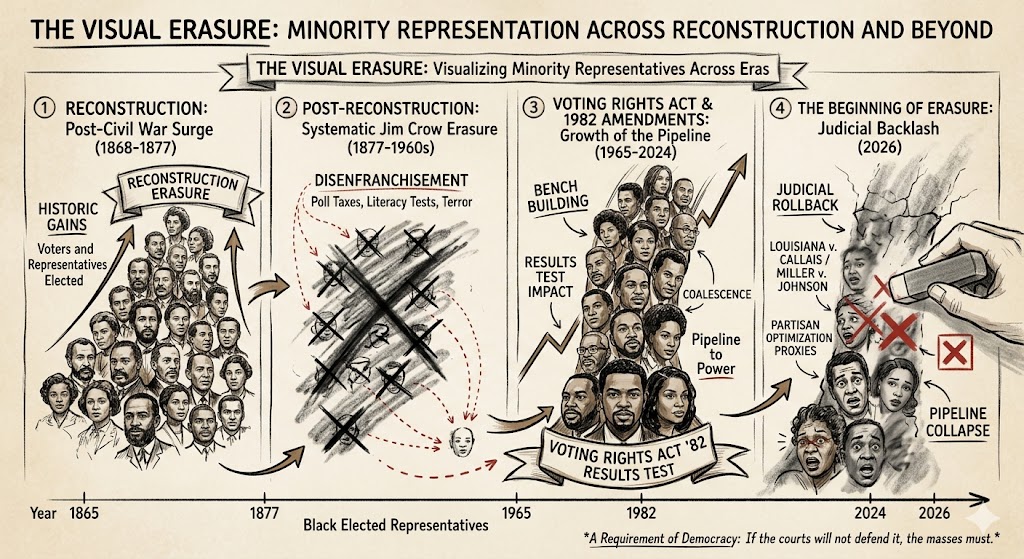
During the Reconstruction Era, Southern states enacted Black Codes to restrict the rights and freedoms of newly liberated African Americans, maintaining white control and a system of racial subordination.These codes, passed by all-white legislatures elected after the Civil War, limited African Americans’ ability to vote, testify against whites, serve on juries, and own firearms.
The American Civil War ended
in 1865 with a surrender by the Confederates. But for the newly freed
African Americans in the South, the true struggle for
freedom had just begun. The time period of rebuilding after
the Civil War is called, Reconstruction. During this time, three
Reconstruction Amendments were added to the Constitution
in an attempt to ensure the rights and equalities of
African Americans in the South. The 13th officially abolished slavery;
the 14th gave African Americans citizenship and equal protection
under the law; and the 15th stated that
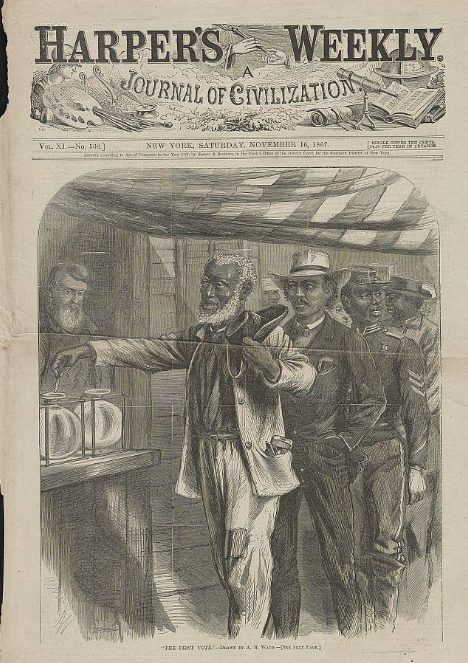
no citizen would be denied the right to vote. Resistance to Reconstruction
policies and laws were rampant in the South. Racist hate groups like the Ku Klux Klan
emerged and intimidated African Americans at the polls. In order to resist equality efforts,
some Southern states began passing Black Codes,
or laws that counter-acted the Reconstruction Amendments. The state of Louisiana required
that all voters passed a literacy test in order to be
eligible to vote. This law mandated
that the test be given to everyone who
could not verify that they had at least a 5th-grade
education. Can you prove a
fifth grade education, ma’am? Uh, um, no sir.
I actually have a
lot of difficulty reading. Well, I guess you should
take the test anyway before we register you. Have a seat over
there and turn it in whenever you
are finished. Next. Yes, sir. I’d like
to register to vote. Well you’ll need to
take this test in order to prove you have
a fifth grade education. I can actually
show you my high school diploma, sir. I said, you need to
take this test. Now go on then,
sit over there. Read the directions and
get started, you only have ten minutes
to finish! (Chuckles)
Well, I see that number 20 was rather
difficult for you. Unfortunately you
have failed. And ma’am,
I’m sure your test was fine. You may continue
your registration. The questions were
deliberately designed to be tricky and confusing. Question #20 says,
“Spell backwards, forwards.” Whites would be
judged correct no matter what they wrote as an
answer. But African Americans
who wrote both words but forgot to include
the comma would be failed.
Or, if they did include the
comma they would be failed for that. If they just wrote the
word, “backwards” they would be failed
for not including the word “forwards.” Or if they wrote “backwards”
instead of actually spelling it backwards, they would
fail… All non-whites were
forced to take the test even if they had
a college degree, while whites were often
excused from taking it no matter how little
education they had. If an African American
missed one question, he “failed.” But if a white person
could not even read the questions,
he “passed.” The people grading
the tests were all white. It was completely
up to their discretion whether a person
passed the test or not. In 1965 the
Voting Rights Act was passed in order
to prohibit states from denying
anyone the right to vote. This was 100 years
after the abolishment of slavery in
the United States.
Click below to begin.
Results


#1. Which U.S. state had a majority-Black state legislature during Reconstruction?
#2. Who was the last Black member of Congress elected during the Reconstruction era?
#3. What were the Black Codes designed to do after the Civil War?
#4. What year did the first African American serve in the U.S. Senate?
Hiram Rhodes Revels, a Republican from Mississippi, was the first African American to serve in the U.S. Congress, elected to the Senate in 1870
#5. After Reconstruction, in what year was the next African American elected to Congress from the South?
About The Author