Brooklyn Black Political Power: A Parallel Universe to Harlem’s Gang of Four
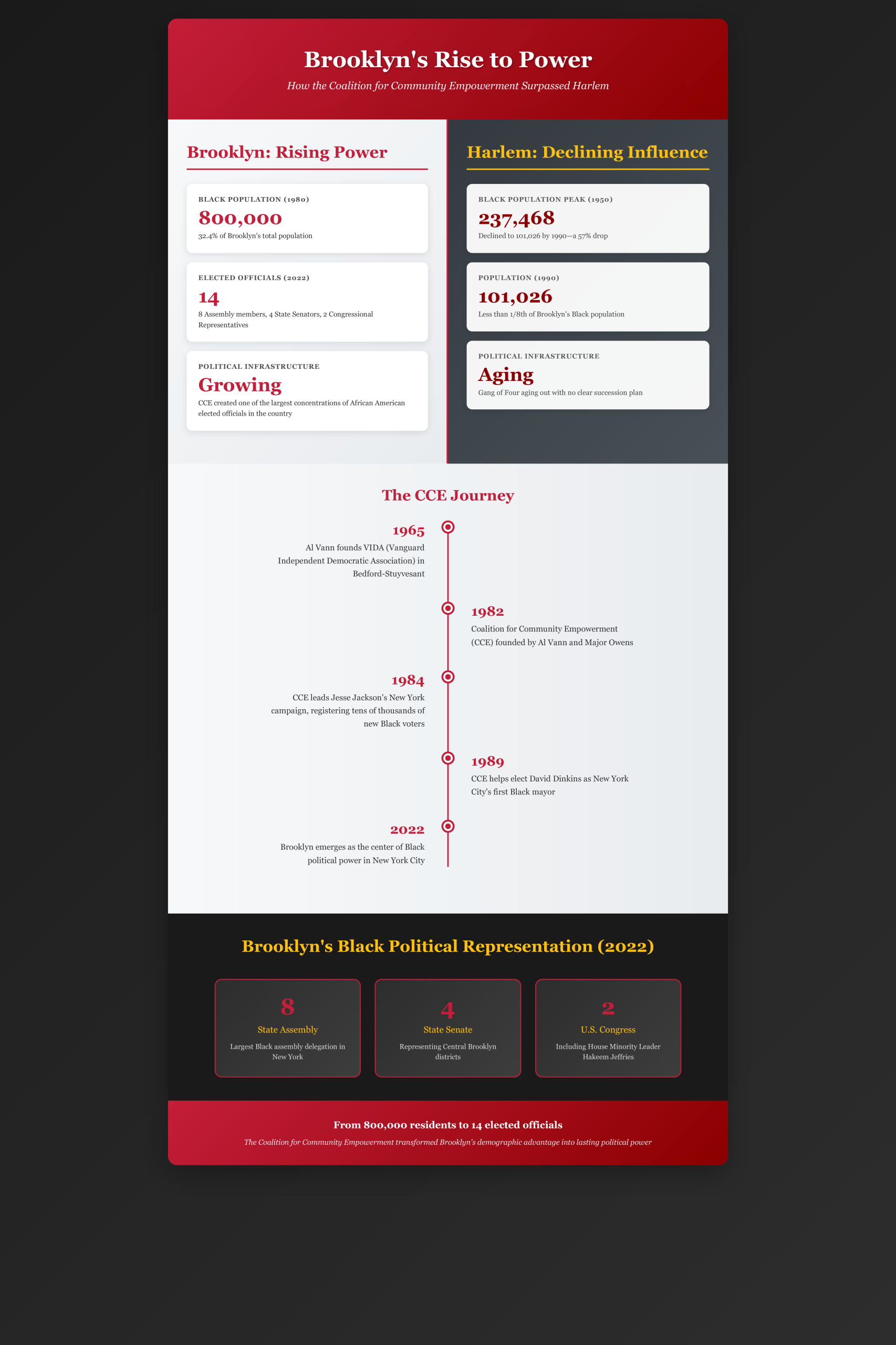
The Coalition for Community Empowerment, led by Al Vann and Major Owens, built a Brooklyn Black political power base that surpassed Harlem’s influence. While the Harlem Gang of Four commanded headlines, the CCE Brooklyn coalition quietly built the most formidable Black political infrastructure in New York City. Founded in 1982 by Al Vann, assemblyman from Brooklyn’s 56th district, and Major Owens, congressman from Brooklyn’s 11th district, the Coalition for Community Empowerment (CCE) addressed the historical exclusion of Black and Puerto Rican residents from Bedford Stuyvesant politics and Central Brooklyn representation. Despite Brooklyn’s larger Black population, the Harlem Gang of Four had dominated citywide Black political power for decades. CCE corrected that imbalance, sending more Black representatives to Congress and controlling more legislative seats than any other borough in America.
This is the untold story of Brooklyn Black political power and dominance—a tale of strategic organizing, ideological debates, coalition-building, and the systematic construction of electoral power that transformed New York City politics.
The Brooklyn Advantage: Demographics and Destiny
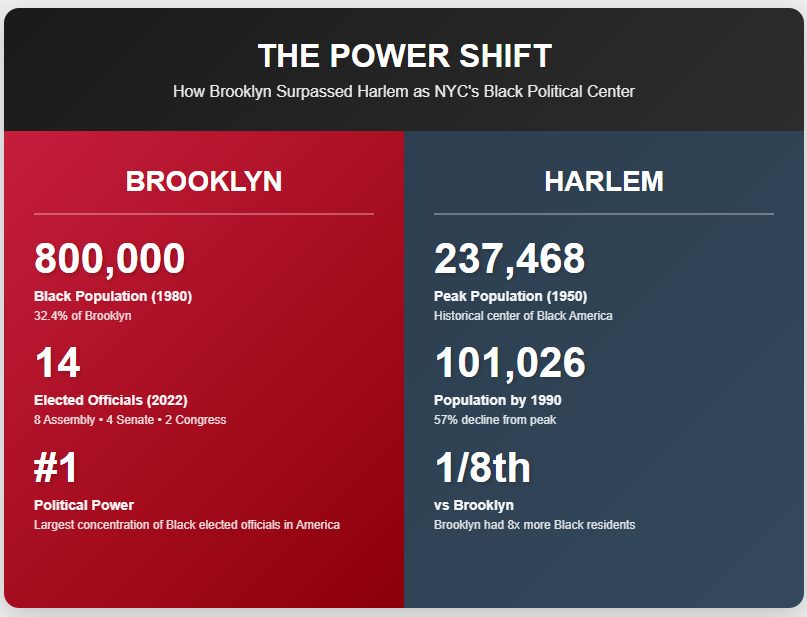
Brooklyn’s path to Black political power was shaped by a fundamental demographic reality: Brooklyn had the largest Black population of any borough in New York City. By 1980, Brooklyn’s Black population reached approximately 800,000 residents—32.4% of the borough’s total population—while Harlem’s Black community had declined to just 101,026 by 1990, a devastating 57% drop from its 1950 peak of 237,468. Neighborhoods like Bedford-Stuyvesant, East Flatbush, Brownsville, East New York, and Crown Heights Brooklyn formed a continuous corridor of Black political strength that was nearly eight times larger than Harlem’s geographic footprint.
This demographic advantage translated into electoral muscle. While Harlem could claim historic symbolism and national visibility through figures like Adam Clayton Powell Jr. and the Gang of Four, Brooklyn could claim raw numbers—more voters, more assembly districts, more city council seats, and ultimately, more members of Congress. By 2022, Brooklyn had eight Black representatives in the State Assembly, four state senators, and two representatives in Congress, making it one of the largest concentrations of African American elected officials in the country.
But demographic advantage alone doesn’t create political power. Brooklyn’s Black community had to overcome internal divisions, build organizational infrastructure, and navigate the same white-dominated political machines that controlled patronage and resources throughout the city. The story of how Brooklyn’s Black leaders accomplished this is one of strategic brilliance, ideological commitment, and relentless organizing.
The Coalition for Community Empowerment (CCE): Brooklyn’s Political Engine
The Coalition for Community Empowerment emerged in the 1970s as the organizational heart of Brooklyn’s Black political movement. Unlike Harlem’s Gang of Four—which operated more as an informal alliance of established politicians—CCE was a formal organization with a grassroots base, an ideological vision, and a systematic approach to building power.
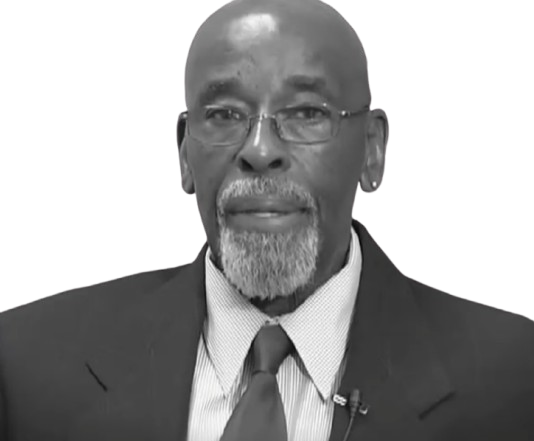
Al Vann: The Architect and Chief Strategist
Al Vann Assemblyman and New York City councilman was the Coalition for Community Empowerment founding leader and its chief strategist. A former teacher and community activist, Vann understood that Brooklyn Black political power required more than charismatic leadership—it required organization, discipline, and a long-term vision for building independent Black political institutions.
Coalition for Community Empowerment in Brooklyn: Al Vann’s Legacy of Black Political Power
The Visionary Leader and His Philosophy
Al Vann’s political philosophy was rooted in Black self-determination and community control. Unlike some Brooklyn politicians who sought accommodation with white political machines, Vann advocated for building independent Black political power that could negotiate from strength rather than dependence.
Ocean Hill-Brownsville: The Foundation of Political Activism
Al Vann’s quest for community control and self-determination was visible as early as the Ocean Hill-Brownsville school conflict of 1968—a watershed moment in the fight for neighborhood and parent control of schools. As a young assistant principal at Junior High School 271, Vann formed a decades-long partnership with teacher-turned-community-activist Jitu Weusi (formerly Leslie Campbell) and other key players who co-founded the African American Teachers Association in 1964.
During the historic 1968 teachers’ strike, Vann and his ATA colleagues stood with the community-controlled school board against the United Federation of Teachers, advocating for Black and Puerto Rican parents’ right to control their children’s education. This partnership became a key element of Vann’s Brooklyn Black political power base. Better than any contemporary elected official, Vann was skilled at translating community activism into electoral power.
The Political Strategist Behind the Movement
Al Vann, assemblyman from Brooklyn, was a mentor to many, none more significant than his Bedford-Stuyvesant neighbor and chief political strategist, Dr. John Flateau. Flateau served as Vann’s legislative aide and became a leading political strategist in his own right, later serving as Chief of Staff to Mayor David Dinkins and teaching at Medgar Evers College until his death in 2023.
Vann understood that civic education and electoral participation are the lifeblood of community empowerment; and the manifestation of that power, gives the people’s representatives, respect and even more power. Vann led Jesse Jackson’s 1984 Presidential Campaign, and New York had the largest Delegation at the Presidential National Convention in America. The Jackson campaign won New York City and laid the ground for David Dinkins to win in 1989, NYC’s 106th Mayor and now Honorable Eric Adams is NYC’s 110th Mayor.
Dr. John Flateau, chief political strategist, Coalition for community empowerment, Director of the DuBois Bunche Center for Public Policy at Medgar Evers College, july 2022 tribute to Vann
Three times, Vann was elected by his peers to head the NYS Black, Hispanic, Asian Caucus; where they delivered billions of state funds and programs; led the U.S. anti-apartheid divestment movement among state legislatures; protected minorities voting rights at the NewYork City and State levels.
Editor’s note: This post will be updated with personal reflections, insight, and commentary from Hulbert James, a Black Politics Advisory Council member and , most importantly, former chief of staff to Congressman major owens, co-founder of the coalition for Community Empowerment
Hulbert James: Another Key Strategist
Another central figure in the Coalition for Community Empowerment’s operations was Hulbert James, who served as Chief of Staff to Major Owens congressman from Crown Heights, Brooklyn. James was instrumental in translating the Coalition’s grassroots organizing into effective electoral campaigns. Like Flateau, James played a pivotal role in Jesse Jackson’s 1984 presidential campaign, serving as New York director of the campaign and helping to register thousands of new voters in Black communities. James and Flateau also held senior positions in the Dinkins administration, taking the CCE Brooklyn community empowerment philosophy citywide into New York City government. James’s career later included serving as Representative of the Secretary of Labor for Region II (covering New York, New Jersey, Puerto Rico, and the Virgin Islands) and working with the Department of Housing and Urban Development to develop housing and business opportunities in distressed communities. His work exemplified the Coalition’s dual commitment to electoral politics and substantive policy change that could improve the material conditions of Black and Latino communities.
Coalition for Community Empowerment: The Training Ground
Founded in 1982, the Coalition for Community Empowerment became Vann’s most powerful organizational tool. As a New York State Assemblyman representing Bedford-Stuyvesant from 1975 to 2001, Vann used his leadership position in Bedford Stuyvesant politics to advance legislation supporting affordable housing, education reform, and economic development in Black communities. But his greatest contribution to Brooklyn Black political power was organizational: CCE Brooklyn became the training ground for a generation of Black political leaders who would go on to hold seats in the State Assembly, City Council, Congress, and other positions of power.
The Coalition for Community Empowerment successfully screened and ran Black candidates for public offices and party positions across Central Brooklyn, defeating long-term incumbents and dramatically increasing the number of Black elected officials throughout the 1980s and 1990s. It functioned as a “round table” of community leaders, elected officials, and aspiring candidates working to address community political empowerment and expand Black political power throughout Black Brooklyn.
A Roster of Influential Proteges
The list of political leaders whose careers intersected with the Coalition for Community Empowerment ranges from politicians whose leadership and constituents remained solely in Brooklyn to those who achieved statewide and national recognition and power:
Letitia James
New York State Attorney General Letitia James started her political career as counsel in the office of Al Vann, working with him for ten years. She described herself as “a student of Al Vann, one of many,” and credited him as instrumental in bringing her into politics. James became the first Black woman elected as New York State Attorney General and the first Black woman to hold statewide office in New York.
Hakeem Jeffries
House Minority Leader Hakeem Jeffries ran twice against Vann protégé and longtime Coalition for Community Empowerment member Roger Green—first in 2000 (losing 59% to 41%) and again in 2002 (losing 52% to 38%).
Demonstrating the power of the Coalition for Community Empowerment in Central Brooklyn, even though Jeffries had the support of Brooklyn Democratic Party boss Vito Lopez (who chaired the party from 2006 to 2012), he could not unseat Roger Green. Jeffries only won the Assembly seat in 2006 after Green retired from the New York State Assembly to run for Congress against Ed Towns. Jeffries went on to become the first Black person to lead either party in Congress when he was elected House Democratic Leader in 2022.
Other Notable Leaders
The Coalition’s influence extended to many other prominent leaders, including:
- Roger Green: Long-serving assemblyman and Vann protégé who held the 57th Assembly District
- Velmanette Montgomery: State Senator who worked closely with the Coalition
- Annette Robinson: Former City Council member and Assemblywomember who was Vann’s political partner for over 40 years
- Major Owens: Congressman and co-founder of the Coalition for Community Empowerment
- Eric Adams: Brooklyn Borough President (2014-2021) and 110th Mayor of New York City (2022-present)
The 1984 Jesse Jackson Campaign
Vann’s leadership of Jesse Jackson’s 1984 presidential campaign in New York State demonstrated the Coalition’s organizing power. As state campaign director, Vann and his team registered tens of thousands of new Black voters, particularly in Brooklyn, and delivered the largest bloc of delegates pledged to Jackson at the Democratic National Convention—a remarkable achievement that showcased the potential of Brooklyn Black political power to mobilize and turnout voters.
This early success laid crucial groundwork for David Dinkins’s historic election as New York City’s first Black mayor in 1989, proving Vann’s theory that organized Black political power could achieve transformational victories.
Vann’s Legislative Leadership
Beyond his work as an organizer, Vann distinguished himself in the New York State Assembly:
- Chair of the Assembly Committee on Children and Families (1981-1992)
- Three-time Chair of the New York State Black, Puerto Rican, and Asian Legislative Caucus (also known as the New York State Association of Black and Puerto Rican Legislators, 1990-1994)
- Leader in the anti-apartheid divestment movement among state legislatures
- Advocate for minority voting rights protections
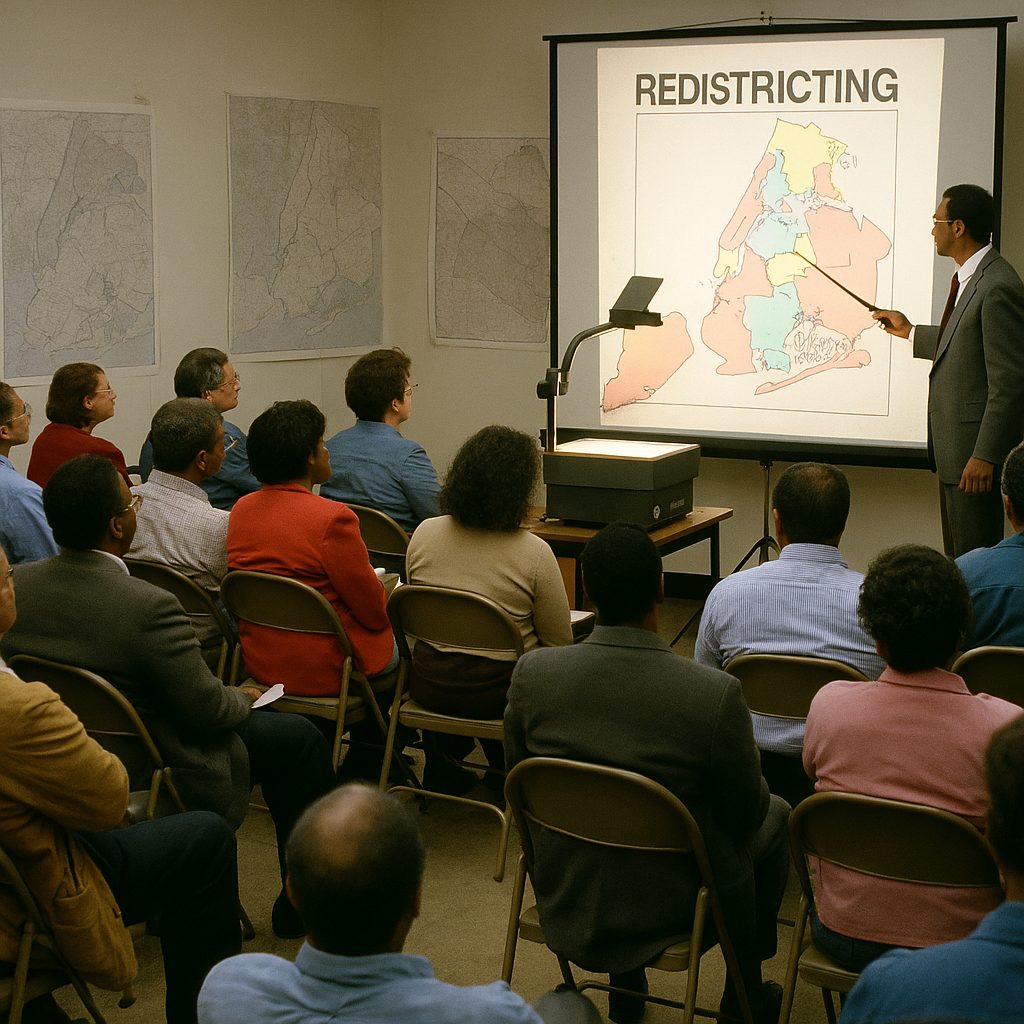
Vann and his colleagues, including attorneys Esmeralda Simmons and Paul Wooten, and strategist John Flateau, filed lawsuits in the early 1980s that successfully argued for redistricting to allow for greater minority representation—expanding Black political power throughout New York City.
Additional Leadership Roles
Vann’s commitment to institution-building extended beyond electoral politics:
- Co-founder of Medgar Evers College of the City University of New York
- Founder of the Vanguard Independent Democratic Association (VIDA)
- Co-founder of the Black United Front (1977) with Rev. Herbert Daughtry, Jitu Weusi, and Sam Pinn
- Chair of the Coalition for a Just New York (1983)
- First African American to serve on Community School Board 13
- Instrumental in creating the Bedford Stuyvesant Restoration Corporation
- Founder of Vanguard Urban Improvement Association
City Council Service
In November 2001, Vann was elected to represent the 36th District (Bedford-Stuyvesant and Crown Heights Brooklyn) in the New York City Council, serving from 2002 to 2013. As Chair of the Committee on Community Development, he addressed poverty, the foreclosure crisis, the city’s tax lien sale, and predatory equity. He founded the 36th Council District Hurricane Katrina Relief Effort, the Black Brooklyn Empowerment Convention, and the Council’s New York City Works Initiative.
A Lasting Legacy
Al Vann passed away peacefully on July 14, 2022, at age 87. His legacy lives on through the dozens of elected officials he mentored, the institutions he helped build, and the model he created for translating grassroots activism into sustainable political power.
“Al Vann was a real mentor to me and countless others… He was a very special and dear friend, and we all sit on his shoulders of leadership.” NYC Mayor, Eric Adams
As Mayor Eric Adams stated upon Vann’s passing: “Al Vann was a real mentor to me and countless others… He was a very special and dear friend, and we all sit on his shoulders of leadership.”
The Coalition for Community Empowerment remains a testament to Vann’s vision: that organized, independent Brooklyn Black political power, rooted in community control and self-determination, could transform the political landscape not just of Brooklyn, but of New York City and beyond.
Three times, Vann was elected by his peers to head the NYS Black, Hispanic, Asian Caucus; where they delivered billions of state funds and programs; led the U.S. anti-apartheid divestment movement among state legislatures; protected minorities voting rights at the NewYork City and State levels.
As a New York State Assemblyman representing Bedford-Stuyvesant, Vann used his position to advance legislation supporting affordable housing, education reform, and economic development in Black communities. But his greatest contribution was organizational: CCE Brooklyn became the training ground for a generation of Black political leaders who would go on to hold seats in the State Assembly, City Council, Congress, and other positions of power.
Vann’s approach emphasized:
- Grassroots organizing through block associations, tenant organizations, and community groups
- Electoral infrastructure including voter registration, poll watching, and get-out-the-vote operations
- Candidate recruitment and training to ensure a pipeline of qualified Black candidates
- Coalition building across Black neighborhoods in Brooklyn and beyond
- Ideological clarity about the goals of Black political empowerment
Major Owens: The Congressional Powerhouse
Major Owens brought a different profile to Brooklyn’s Black political leadership. A librarian by training and an intellectual by temperament, Owens combined policy expertise with grassroots organizing skills that made him one of Brooklyn’s most effective political figures.
Before entering electoral politics, Owens served as Commissioner of the New York City Community Development Agency under Mayor John Lindsay, giving him insight into how city government operated and how resources could be channeled to Black communities. He later directed the Community Service Society’s Brownsville Community Council, deepening his roots in Brooklyn’s neighborhoods.
Major Owens was elected to the New York State Senate in 1974, where he became a leading voice for education reform, workers’ rights, and social justice. His Senate tenure demonstrated his ability to master complex policy issues and build coalitions across racial and ideological lines.
In 1982, Owens was elected to the U.S. House of Representatives, representing Brooklyn’s 11th Congressional District (later the 12th District). He would serve in Congress for 28 years, becoming a powerful advocate for libraries, education, labor rights, and urban policy. His long tenure and policy expertise made him one of the most influential Black members of Congress, though he often operated outside the spotlight.
Owens’s contribution to Brooklyn Black political power and infrastructure extended beyond his own electoral success. He mentored younger politicians, supported CCE’s organizing work, and used his congressional office to provide resources and visibility to Brooklyn’s Black community. His son, Chris Owens, would later continue the family’s political legacy by running for his congressional seat.
Roger Green: The Assembly Powerhouse
Roger Green represented the next generation of Brooklyn Black political leadership. Elected to the New York State Assembly in 1980 to represent Bedford-Stuyvesant and Crown Heights Brooklyn, Green became one of the most powerful state legislators in New York.
Green’s rise illustrated CCE’s effectiveness at identifying, training, and electing Black candidates. He came through CCE’s organizing networks and understood the importance of constituent services, community engagement, and strategic coalition-building. Green would go on to chair important Assembly committees and become a major force in Albany.
Green’s political longevity—he served in the Assembly for over two decades—demonstrated the staying power of Brooklyn’s Black political infrastructure. Unlike some politicians who depended on a single election or moment, Green built an organization that could win repeatedly and weather political challenges.
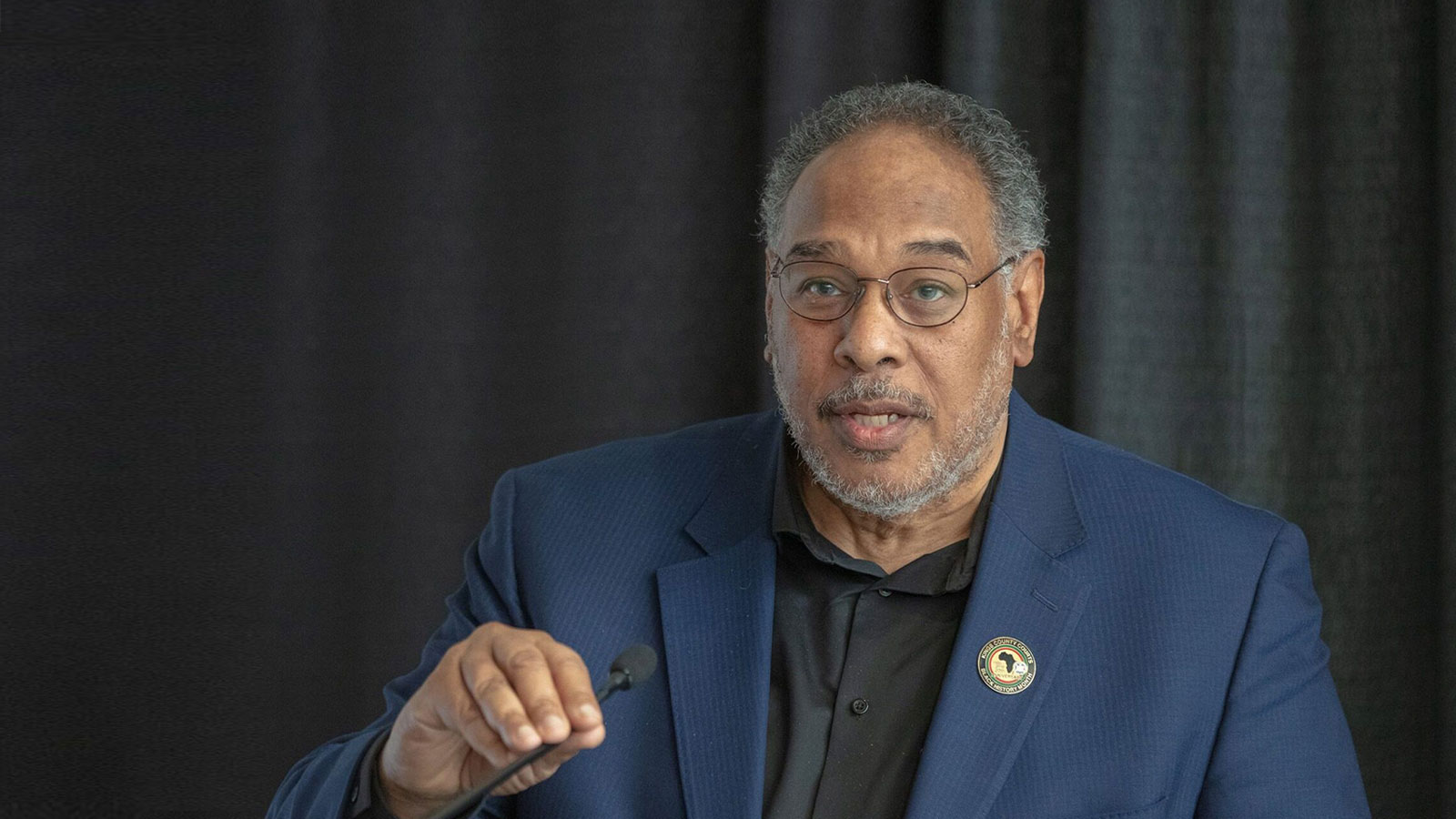
John Flateau Political Strategist Brooklyn
Behind Brooklyn’s electoral successes stood strategic operatives who understood the mechanics of campaigns, the psychology of voters, and the tactics needed to win in New York’s complex political environment. None was more important than John Flateau.
John Flateau was Brooklyn’s answer to Bill Lynch—the behind-the-scenes strategist who could design winning campaigns, navigate political minefields, crunch the numbers, map the districts, and build coalitions that held together under pressure. A brilliant tactician with deep roots in Brooklyn’s Black community, Flateau worked on campaigns across the borough and beyond.
Flateau’s strategic approach emphasized:
- Data-driven campaigning using voter files, precinct analysis, and targeting
- Field operations that maximized voter turnout in Black neighborhoods
- Message discipline that kept campaigns focused on core themes
- Coalition management that balanced different constituencies and interests
- Opposition research that prepared candidates for attacks and counterattacks
Flateau was a cofounder of Al Vann’s Vanguard Independent Democratic Association (VIDA). He also worked on Major Owens’s congressional campaigns, helped elect numerous state and local officials, and advised Jesse Jackson’s New York operations during the 1988 presidential campaign, and was the campaign coordinator for David Dinkins successful mayoral campaign in 1989. He subsequently served as Chief of Staff to Mayor David Dinkins. Flateau’s strategic insights helped shape Brooklyn’s approach to political organizing and campaign management.
Flateau’s legacy extended beyond individual campaigns. He trained younger operatives, wrote about political strategy, and taught political science at Medgar Evers College—passing his knowledge to the next generation of Brooklyn political leaders. His work demonstrated that winning elections required not just passion and principle, but also technical expertise and strategic thinking.
Ed Towns: The Congressional Dean
Ed Towns represented a different tradition within Brooklyn Black politics—less ideologically radical than CCE, more willing to work within traditional Democratic Party structures, but no less committed to advancing Black interests.
Towns was first elected to Congress in 1982, representing Brooklyn’s 10th Congressional District (later the 11th District). Unlike Major Owens, who came through CCE and grassroots organizing, Towns had worked within traditional political channels and had support from regular Democratic organizations.
Towns’s congressional career spanned three decades, during which he rose to chair the powerful House Oversight and Government Reform Committee. He used his position to investigate government waste, advocate for minority business development, and secure resources for Brooklyn.
Towns’s relationship with CCE was complex. While not part of the CCE inner circle, he recognized the organization’s power and often worked in parallel with CCE-backed politicians to advance Brooklyn’s interests. His success demonstrated that Brooklyn’s Black political infrastructure was broad enough to accommodate different political styles and approaches.
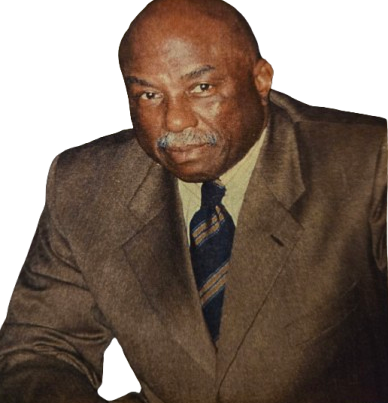
Bill Banks: The Brooklyn Operative
Bill Banks was another key figure in Brooklyn’s political infrastructure—a behind-the-scenes operator who understood how to win elections, manage campaigns, and navigate the complex world of New York City politics.
Known primarily as a Brooklyn social service leader who built Colony South Brooklyn Houses into a major community-based powerhouse, Banks was originally from Harlem and maintained close relationships with the Harlem Gang of Four, particularly Congressman Charlie Rangel. This connection gave Banks—and by extension, Brooklyn—access to Harlem’s political networks and resources.
Banks served as campaign manager for Ed Towns and advised various Brooklyn and Bronx elected officials. His strategic insights and organizational skills helped elect a generation of Brooklyn politicians. Banks also played a key role in organizing Black elected official support for Countdown 88, demonstrating his ability to build coalitions across boroughs and neighborhoods.
Caribbean-American Political Power: Una Clarke and the Next Generation
Brooklyn’s Black political infrastructure was enriched by the growing Caribbean-American population in neighborhoods like East Flatbush, Crown Heights, and Flatbush. After the expansion of the New York City Council following a voting rights lawsuit that led to the dissolution of the unelected, but powerful Board of Estimate, Una Clarke became the first Caribbean-American woman elected to the New York City Council, representing District 40 in 1991.
Clarke’s election signaled the rising political power of Brooklyn’s Caribbean-American community—a demographic force that would reshape the borough’s politics in the 1990s and beyond. She brought attention to issues affecting Caribbean immigrants, including immigration reform, economic development, and cultural recognition.
Clarke’s most significant legacy may be political: her daughter, Yvette Clarke, followed her into politics and was elected to Congress in 2006, representing Brooklyn’s 11th Congressional District (later the 9th District). Yvette Clarke would go on to become Chair of the Congressional Black Caucus, one of the most powerful positions in Black American politics.
The Clarke family’s political trajectory illustrated Brooklyn’s ability to incorporate new immigrant communities into its Black political infrastructure while maintaining continuity and building intergenerational power.
The Harlem-Brooklyn Dynamic: Competition and Cooperation
The relationship between Harlem’s Gang of Four and Brooklyn’s political leadership was complex—sometimes competitive, sometimes cooperative, always strategic.
The Competition
Brooklyn’s leaders often chafed at Harlem’s assumption of leadership over New York City’s Black political community. Harlem had history, symbolism, and national visibility, but Brooklyn had numbers and organizational depth. This tension played out in various ways:
- Mayoral politics: When David Dinkins ran for mayor in 1989, Brooklyn leaders had to decide whether to support a Harlem candidate or field their own. Ultimately, Brooklyn’s support was crucial to Dinkins’s victory, but the borough’s leaders negotiated for appointments and policy commitments in exchange.
- Congressional redistricting: As New York’s Black population grew, battles over congressional district lines often pitted Harlem against Brooklyn. Each borough wanted to maximize its congressional representation, leading to complex negotiations and occasional conflicts.
- Resource allocation: City and state resources—from capital projects to social services—had to be distributed across Black communities. Harlem and Brooklyn leaders competed to secure resources for their constituencies.
- Leadership claims: Who spoke for Black New York? Harlem’s leaders, with their national profiles and historic legacy? Or Brooklyn’s leaders, with their larger population base and more extensive political infrastructure?
The Cooperation
Despite these tensions, Harlem and Brooklyn leaders often cooperated on shared priorities:
- Statewide and national campaigns: When Jesse Jackson ran for president in 1988, both Harlem and Brooklyn mobilized their communities. The Countdown 88 voter registration campaign brought together leaders from both boroughs and added the Bronx and Queens.
- Legislative coalitions: In Albany and Washington, Black elected officials from Harlem and Brooklyn worked together on legislation affecting African American communities.
- COBED: The Council of Black Elected Democrats provided a forum where African American political leaders from Harlem, Brooklyn, the Bronx, and Queens could coordinate strategy and present a united front on key issues with .
- Crisis response: When Black communities faced crises—from police violence to economic disinvestment—Harlem and Brooklyn leaders often stood together.
The Harlem-Brooklyn dynamic was less about pure competition or pure cooperation and more about strategic calculation. Leaders from both boroughs understood that they needed each other to maximize Black political power in New York City, even as they competed for primacy within that coalition.
Brooklyn’s Electoral Infrastructure: The Mechanics of Power
Brooklyn’s political success wasn’t accidental—it was built on systematic infrastructure that could identify voters, mobilize supporters, and win elections consistently.
Voter Registration and Turnout
Brooklyn’s Black political organizations invested heavily in voter registration drives that added thousands of new voters to the rolls. Like Countdown 88 in its scope but sustained over years, these efforts ensured that Brooklyn’s demographic advantage translated into electoral power.
CCE Brooklyn and allied organizations conducted year-round voter registration, focusing on:
- High schools and colleges to register young voters
- Churches and community centers to reach community members
- Block associations to register neighbors
- Naturalization ceremonies to register new citizens (particularly Caribbean immigrants)
Precinct Organization
Brooklyn’s political leaders understood that winning elections required organization at the precinct level. They built networks of block captains, poll watchers, and volunteers who could turn out voters on Election Day.
This precinct-level organization allowed Brooklyn politicians to:
- Identify their supporters and ensure they voted
- Monitor polling places for irregularities
- Respond quickly to problems or challenges
- Maximize turnout in favorable districts
Candidate Pipeline
CCE and other Brooklyn organizations didn’t just win individual elections—they built a pipeline that could produce qualified Black candidates for office at every level. This pipeline included:
- Community organizing: Activists who proved themselves in community struggles
- Civic positions: Leaders of block associations, tenant organizations, and community boards
- Appointed positions: Commissioners, board members, and agency heads who demonstrated competence
- Lower offices: District leaders, state committee members, and local party positions
This systematic approach ensured that Brooklyn always had qualified candidates ready to run when opportunities arose.
Institutional Relationships
Brooklyn’s Black political leaders cultivated relationships with institutions that could amplify their power:
- Churches: The Black church remained central to political mobilization in Brooklyn
- Labor unions: AFSCME, 1199, teachers unions, and others provided volunteers and resources
- Community organizations: Tenant associations, block clubs, and civic groups formed the grassroots base
- Media: Black newspapers, radio stations, and later cable access channels spread the message
Legacy and Lessons: What Brooklyn Teaches Us
Brooklyn’s Black political infrastructure offers several enduring lessons:
1. Demographics Don’t Equal Power Without Organization
Brooklyn had the largest Black population in New York City, but that demographic advantage only translated into political power because leaders built organizations to mobilize voters and win elections. Raw numbers without organization produce nothing.
2. Formal Organizations Can Institutionalize Power
CCE’s organizational structure provided continuity and discipline that informal networks couldn’t match. Having a formal organization meant that strategies could be documented, lessons could be passed on, and power could outlast individual leaders.
3. Ideological Clarity Provides Direction
CCE’s commitment to Black self-determination and community control gave the organization a north star that guided decisions and kept members aligned. Without ideological clarity, political organizations can drift or fracture.
4. Multiple Brooklyn Black Political Power Centers Strengthen the Whole
Brooklyn benefited from having multiple Black elected officials—not just one dominant figure. Major Owens, Ed Towns, Al Vann, and Roger Green each had their own base and brought different strengths, creating redundancy and resilience.
5. Strategic Minds Matter as Much as Charismatic Leaders
John Flateau, Hulbert James, and Bill Banks weren’t elected officials, but their strategic expertise was essential to Brooklyn’s success. Political movements need both visible leaders and behind-the-scenes operators who can design and run winning campaigns.
6. Incorporating Immigrant Communities Expands Power
Brooklyn’s ability to incorporate Caribbean-American political leaders like Una Clarke and Yvette Clarke demonstrated how Black political infrastructure could grow by welcoming new immigrant communities while maintaining core commitments.
The Brooklyn Model Today
Brooklyn’s Black political infrastructure has evolved since its peak in the 1980s and 1990s, but its legacy endures:
- Congressional representation: Brooklyn continues to send multiple Black representatives to Congress
- State legislature: Brooklyn Black elected officials remain a powerful bloc in Albany
- Local government: Brooklyn’s Black communities have strong representation in the City Council and on community boards
- Political pipeline: Organizations continue to train and support new generations of Black political leaders
However, Brooklyn’s Black political community also faces challenges:
- Gentrification: Rising housing costs are displacing long-time Black residents from neighborhoods like Bedford-Stuyvesant and Crown Heights
- Demographic change: New immigrant groups are reshaping Brooklyn’s political landscape
- Generational transitions: As founding leaders retire or pass away, questions arise about who will carry the legacy forward
- Political fragmentation: Without CCE’s organizational discipline, Brooklyn’s Black political community sometimes lacks coordination
Frequently Asked Questions About Brooklyn Black Political Power
What was the Coalition for Community Empowerment (CCE)? The Coalition for Community Empowerment was a Brooklyn-based Black political organization founded in the 1970s and led by Al Vann that built grassroots infrastructure, trained candidates, and mobilized voters to elect Black officials throughout Brooklyn, becoming the organizational heart of the borough’s Black political movement.
Who were the key leaders of Brooklyn’s Black political infrastructure? Key leaders included Al Vann (CCE founder and State Assemblyman), Major Owens (Congressman for 28 years), Ed Towns (Congressman and committee chair), Roger Green (Assembly member), John Flateau (strategic operative), Bill Banks (campaign manager), and Una Clarke (first Caribbean-American woman on City Council).
How did Brooklyn’s Black political power compare to Harlem’s Gang of Four? While Harlem’s Gang of Four had greater national visibility and historic symbolism, Brooklyn had a larger Black population, more congressional seats, more state legislative seats, and more extensive grassroots organizing infrastructure through CCE and allied organizations.
What role did John Flateau play in Brooklyn politics? John Flateau was Brooklyn’s master strategist and campaign manager who designed winning campaigns using data-driven tactics, field operations, and coalition management. He worked on Major Owens’s campaigns, advised Jesse Jackson’s New York operations, and trained the next generation of political operatives.
How did Caribbean-American leaders like Una Clarke fit into Brooklyn’s Black political infrastructure? Una Clarke became the first Caribbean-American woman elected to New York City Council in 1991, representing Brooklyn’s growing Caribbean population. Her daughter Yvette Clarke later became a Congresswoman and Congressional Black Caucus Chair, demonstrating how Brooklyn’s Black political infrastructure successfully incorporated immigrant communities.
What was the relationship between Brooklyn and Harlem Black political leaders? The relationship was complex, combining competition for resources and leadership with cooperation on shared priorities. While Brooklyn leaders sometimes resented Harlem’s claim to speak for all Black New Yorkers, both boroughs worked together on statewide campaigns, legislative coalitions, and crisis response.
What is CCE’s legacy today? CCE’s legacy includes the systematic approach to building Black political power, the emphasis on grassroots organizing and candidate training, and the pipeline of Black elected officials who continue to serve Brooklyn. However, the organization’s influence has waned as founding leaders retired and political power became more fragmented.
The Enduring Importance of Brooklyn’s Political Model
Brooklyn’s Black political infrastructure demonstrated that building sustainable political power requires more than charismatic leaders or favorable demographics. It requires organization, strategy, discipline, and long-term vision.
While Harlem captured the imagination with its historic legacy and high-profile leaders, Brooklyn built the machinery that turned demographic potential into electoral victories. CCE’s model of grassroots organizing, candidate training, and institutional building offers lessons for any community seeking to build political power.
In an era when Black political power faces new challenges—from voter suppression to gentrification to political fragmentation—Brooklyn’s story reminds us that power must be built systematically, sustained organizationally, and passed generationally. The work of Al Vann, Major Owens, John Flateau, and countless grassroots organizers created a blueprint for transforming community strength into political power.
Brooklyn didn’t just elect politicians—it built an infrastructure that could sustain Black political power across generations. That is the true measure of its achievement and the enduring value of its legacy.
Related Articles:
- The Harlem Gang of Four: Architects of Black Political Power in NYC
- Countdown 88: When NYC’s Majority Mobilized
- Jesse Jackson: Architect of Black Political and Economic Power
Published: [Date] Last Updated: [Date]
About The Author