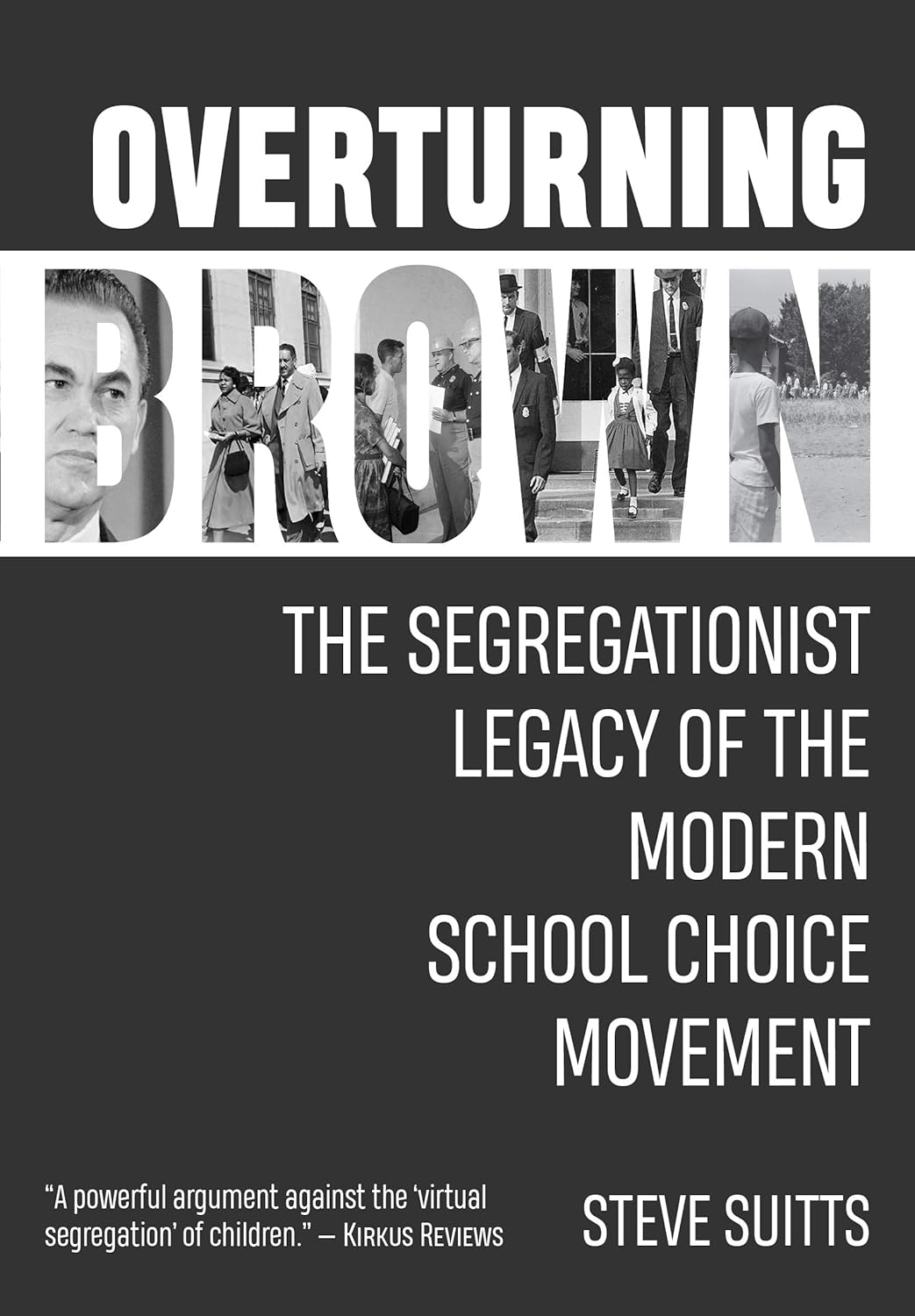
Overturning Brown: The Segregationist Legacy of the Modern School Choice Movement
🏛️ Overturning Brown: The Segregationist Legacy of the Modern School Choice Movement
✍️ Introduction
Steve Suitts’ “Overturning Brown” offers a sobering account of how school choice policies have undermined the legacy of Brown v. Board of Education. This editorial examination explores the book’s central arguments, situates them within broader historical and policy contexts, and raises critical questions about the political architecture behind modern segregation.
In Overturning Brown, historian Steve Suitts delivers a searing indictment of the modern school choice movement, revealing its deep roots in segregationist resistance to Brown v. Board of Education. Suitts asserts that far from being a neutral reform, school choice — in the form of vouchers, tax credits, and charter expansion — has often served to resegregate schools and divert public funds away from Black communities.
Who Is Steve Suitts?
Steve Suitts is a white Southern historian whose career has been defined by civil rights and civil liberties advocacy, educational equity, and voting rights leadership. A native of Alabama, he founded the Alabama Civil Liberties Union, served for two decades as director of the Southern Regional Council (SRC), and later became a senior administrator at the Southern Education Foundation (SEF) in Atlanta. He also teaches at Emory University.
Personal Perspective: Learning the Landscape from Steve Suitts
“When I first arrived in the South from New York, I was stepping into a region shaped by generations of resistance, resilience, and reform. It was Steve Suitts — historian, civil rights advocate, and longtime director of the Southern Regional Council — who introduced me to the political terrain. He didn’t just offer names and dates; he opened doors to the people and institutions that defined Southern movement history.”— Editor-in-Chief, BlackPolitics.org
Many of the leaders he introduced me to are now household names and serving at the top of national Congressional leadership. They were not just policymakers — they were veterans of the civil rights era, architects of voting rights coalitions, and defenders of public education. Through Steve’s mentorship, I came to understand how Southern history isn’t just past — it’s present. It lives in the people, the laws, the schools, and the strategies still shaping our communities.
Steve Suitts is more than a Southern historian. He is a recognized expert in civil rights, civil liberties, education justice, and voting rights, with decades of experience and leadership documenting how policy decisions impact Black communities. His work at the Southern Education Foundation and his scholarship on Brown v. Board have helped expose the ways in which school choice policies — vouchers, tax credits, and charter expansion — often replicate the segregationist tactics of the past. His biography Hugo Black of Alabama remains a definitive account of the Supreme Court justice who helped dismantle segregationist legal frameworks. His voice carries weight because he’s not just a scholar — he’s a witness and participant in the region’s ongoing struggle for justice.
“The modern school choice movement is not a break from segregationist policy — it is its evolution.” — Steve Suitts
Steve’s book is not just a historical analysis. It’s a warning. It shows how the language of “choice” has been weaponized to undermine public education and reestablish dual school systems — one well-funded and private, the other under-resourced and public. For those of us working to build equitable education policy, Suitts offers both a roadmap and a mirror.
Historical Legacy of Segregation Academies and the Southern Strategy
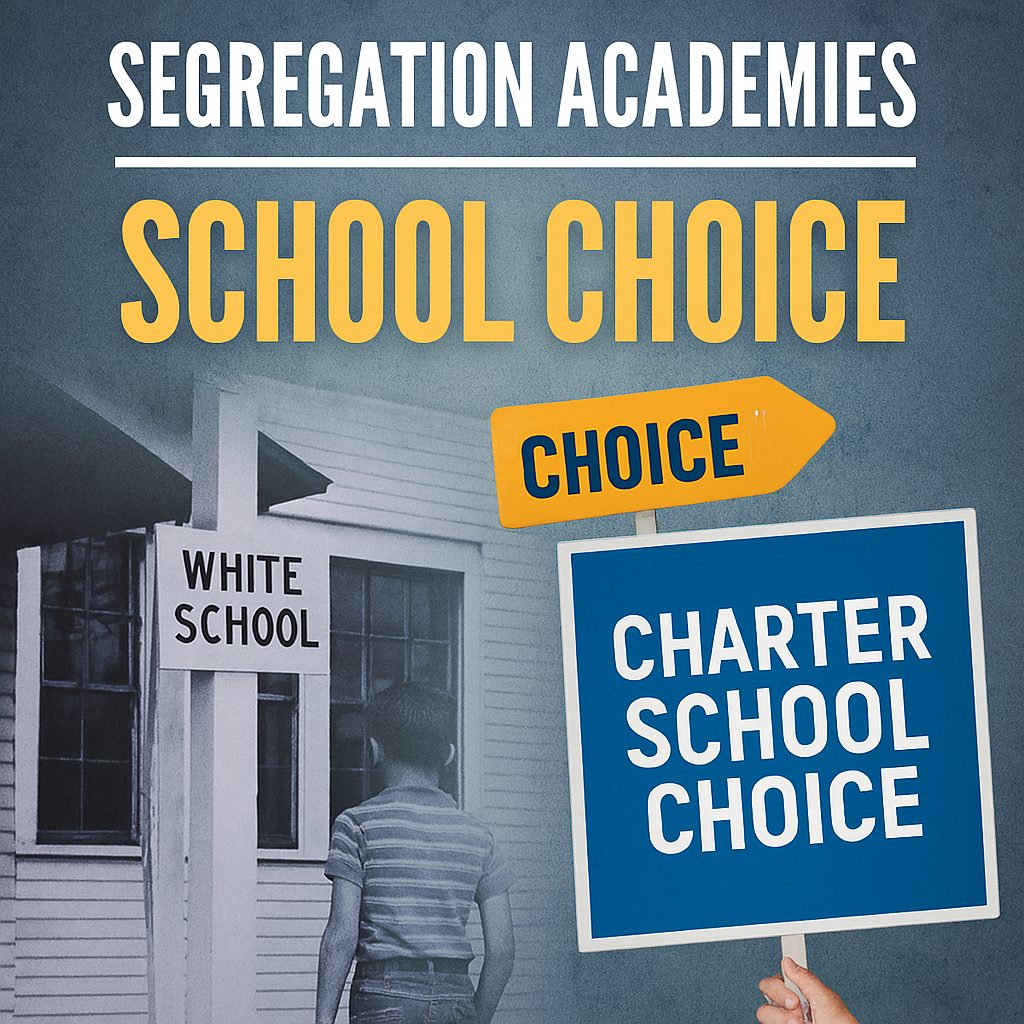
Suitts documents how, after Brown, white Southern communities created “Segregation Academies” — private schools that were nominally independent but functionally subsidized by public funds. These institutions allowed white families to avoid integration while shifting the financial burden to the state.
Separate and Unequal – All Over Again
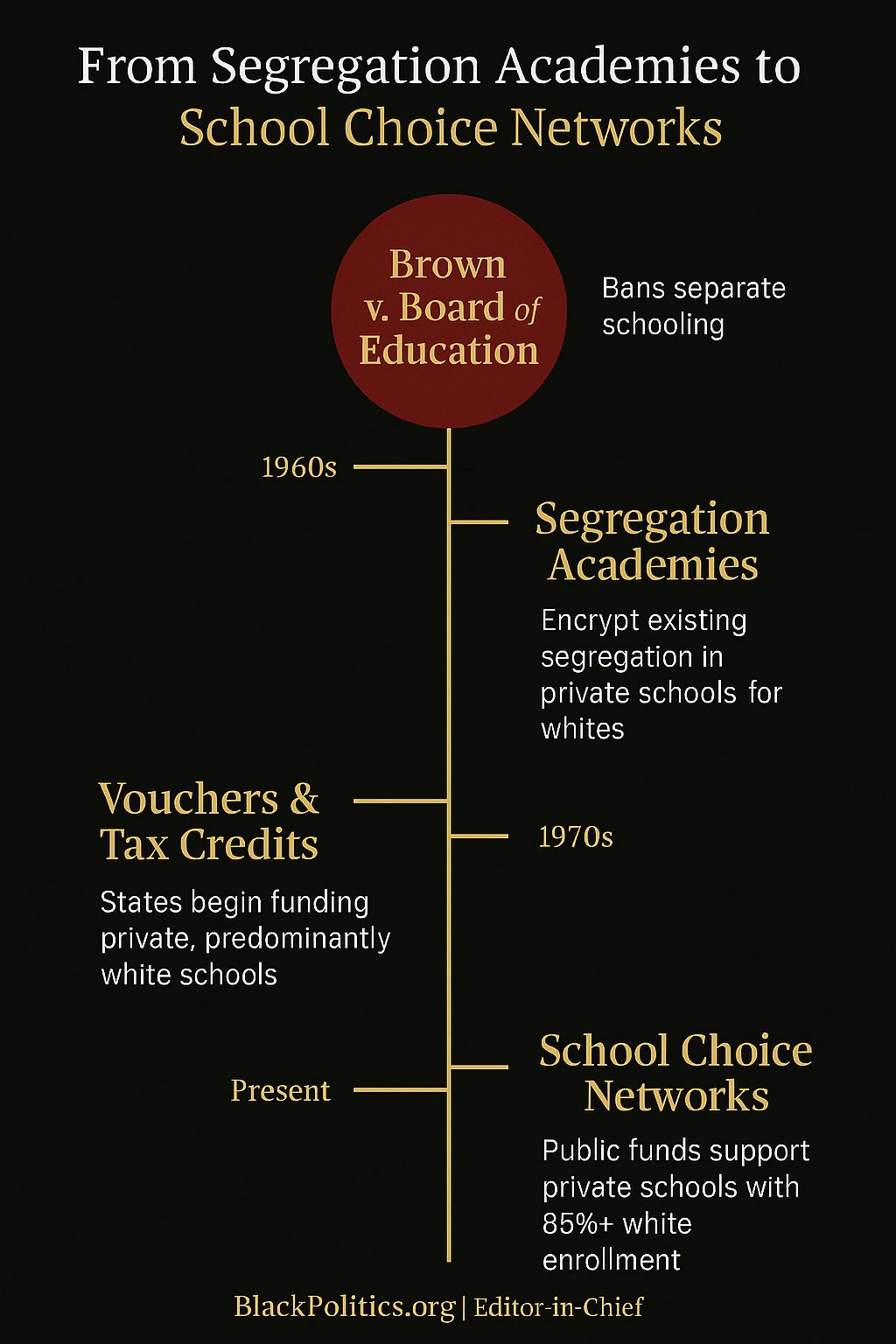
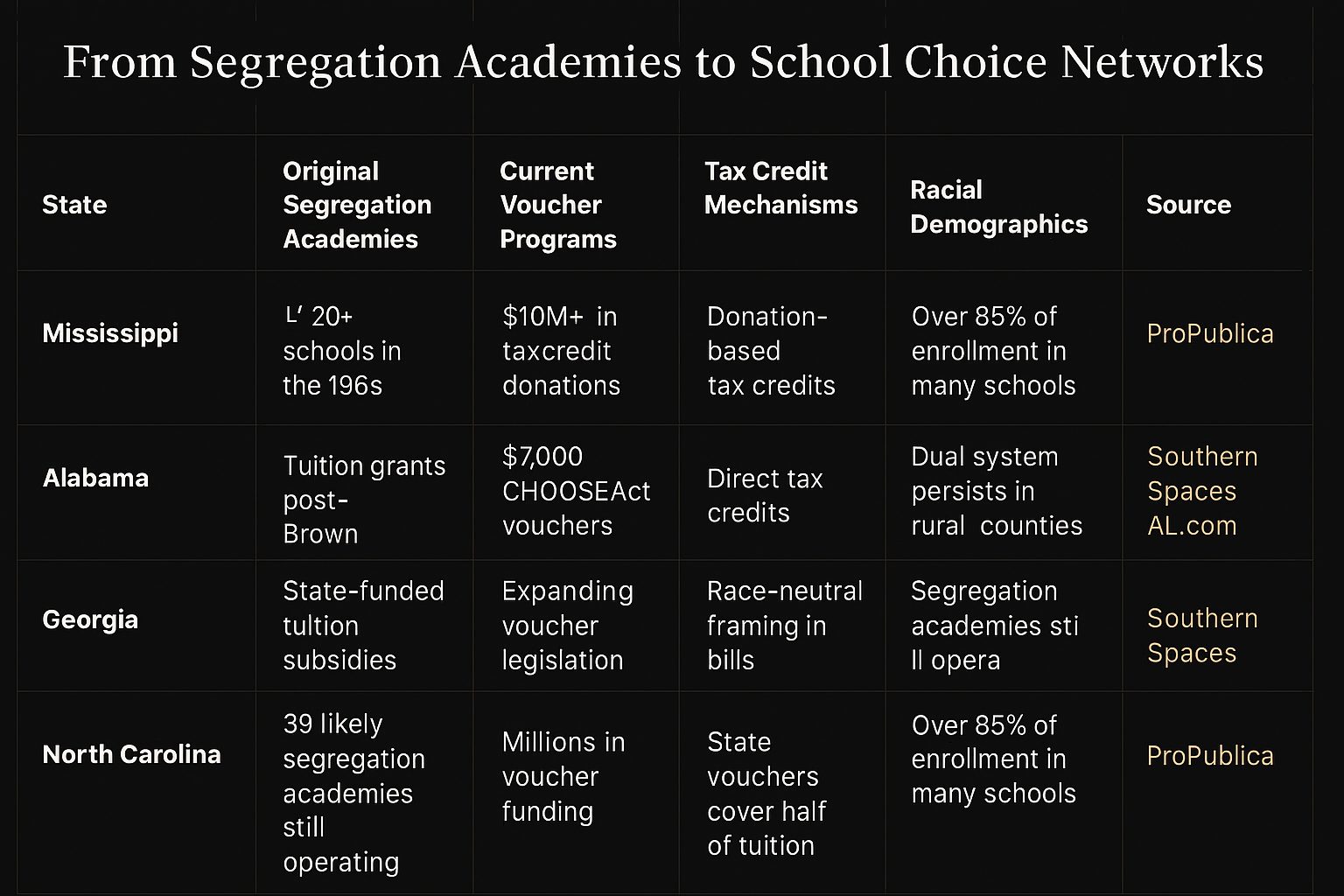
As Steve Suitts documents, many segregation academies were made tuition-free for white families through state-funded vouchers and tax credits — a deliberate strategy to circumvent integration while maintaining public financial support for private, racially exclusive schools.
““School choice has become the new language of resistance to racial equity in education — a way to repackage segregationist intent in race-neutral terms.” — Steve Suitts, Overturning Brown
States like Alabama, Georgia, and Mississippi pioneered these academies using:
- Tuition grants and tax credits
- Transportation subsidies
- Legislation crafted to appear race-neutral
These academies became the backbone of a dual school system: one public and underfunded, serving Black students; the other private and publicly subsidized, serving white students, separate and unequal, all over again.
Modern Echoes: Vouchers and Charter Expansion
Today’s school choice policies mirror these tactics:
- Vouchers disproportionately benefit white, affluent families
- Charter schools often operate with minimal oversight
- Public school funding is siphoned off, leaving Black and Latino students in under-resourced environments
Suitts warns that the U.S. is nearing a nationwide dual school system, eerily similar to the one segregationists built in the 1960s.
Reviewer Praise
“A powerful argument against the ‘virtual segregation’ of schoolchildren enabled by vouchers, credits, and other instruments.” — Kirkus Reviews
“The United States has never been closer to adopting a nationwide program in which the state and federal governments spend billions of tax dollars to finance largely unaccountable private schools.” — Bowling Green Daily News
Strategic Implications for BlackPolitics.org
The legacy of Brown is not just legal — it’s lived. And the policies that seek to overturn it are not just educational — they’re political. This post anchors the Education Opportunity Policy category of BlackPolitics.org in a framework that is both historical and strategic.
- Historical truth: It names the segregationist origins of school choice and traces their evolution through Southern resistance, voucher programs, and tax-credit academies.
- Strategic clarity: It exposes how modern school-choice mechanisms — often cloaked in race-neutral language — continue to divert public funds and resegregate schools.
- Movement relevance: It reframes education equity as a civil rights and voting rights issue, recognizing that access to quality education is inseparable from democratic participation.
This framing positions BlackPolitics.org to lead in several key areas:
- Advisory board recruitment: We seek partners with expertise in education justice, policy analysis, and historical research to help build a living archive of resistance and reform.
- Scorecard development: We are building tools to track voucher legislation, charter school oversight, and racial equity in education funding — district by district, vote by vote.
- Narrative power: By connecting Southern history to national policy debates, we ensure that the lessons of the past inform the strategies of the present.
Education policy is not just about schools — it’s about power, access, and the architecture of justice.
BlackPolitics.org will continue to document, visualize, and amplify the policies that shape our communities. Whether through scorecards, timelines, or strategic briefs, we remain committed to honoring legacy while building tools for future advocacy.
Call to Action
This post—and Steve Suitts’ book—should be required reading for every teachers’ union and education advocate committed to defending public schools. It exposes how modern voucher programs and tax credit schemes aren’t just budgetary threats , but ideological continuations of segregationist policy—they’re the latest iteration of a decades-long strategy to resegregate education under the guise of “choice.” Suitts meticulously documents how Southern states repurposed public funds to sustain private, racially exclusive academies after Brown v. Board, and how those same mechanisms now undermine equity, transparency, and adequate funding in today’s school systems. For educators fighting to preserve inclusive, well-resourced public education, this history isn’t just context—it’s a call to action, a blueprint for resistance.. Understanding the architecture of privatization is essential to dismantling it.
BlackPolitics.org will continue to track:
- State-level voucher legislation
- Charter school expansion and oversight
- Racial equity in education funding
- Historical patterns of resistance and reform
We invite educators, researchers, and movement leaders to join our advisory board and help build a living archive of education justice.
October 14th, 2025
About The Author